That’s where a small back‑up heater suddenly looks tempting. Yet between cheap fan heaters, oil-filled radiators and gas stoves, choosing the right model can either trim your bills or quietly blow them up.
Why a space heater can be a smart ally, not a full-time solution
A space heater is designed as a top‑up, not as a full replacement for central heating. Used well, it lets you heat only the room you occupy, only when you’re there. That’s the opposite of turning up the whole-house thermostat just because your office or bedroom feels cold.
- Targeted heat: you warm the room you’re actually using, not the hallway or guest room.
- Fast comfort: many portable heaters start delivering warmth within seconds or a few minutes.
- Short‑term savings: in a modest home, one well‑chosen heater can keep a single room cosy while the boiler runs lower.
Used for a few hours in one room, a good space heater can cut wasted heating in empty areas and soften the impact of high energy prices.
The catch: not all heaters turn electricity or fuel into useful heat with the same efficiency, and not all suit the same spaces. A bathroom at 7 a.m. is a different story from a home office you work in all day.
Fan heaters: quick comfort, costly watts
Fan heaters are the classic low‑cost option: compact, light, often under £30, and everywhere on supermarket shelves once temperatures drop. They blow air across a hot element and throw that warm air into the room.
Where fan heaters shine
- They heat up almost instantly.
- They’re easy to move from room to room.
- They suit tiny spaces, like a bathroom or a box‑room office, for a short burst of heat.
The hidden downsides
- They draw a lot of power, often 1,800–2,000 watts or more.
- The built‑in fan can be noisy, especially in a quiet room at night.
- Warmth disappears quickly once you switch them off.
Used for ten minutes while you shower, the cost stays low. Run for hours every evening, the bill climbs fast and the air may feel dry and stuffy.
Think of a fan heater as a hairdryer for your room: great for a quick blast of heat, poor as a daily heating strategy.
Convector heaters: decent comfort, average efficiency
Convector heaters work by warming the air that passes through them. Hot air rises, cold air sinks, and that cycle gradually warms the whole space. Many models can be wall‑mounted or simply placed on the floor with feet.
What they do well
- They offer more even heat than a basic fan heater.
- They’re easy to install and often include a thermostat and timer.
- They suit small to medium‑sized rooms used occasionally, like guest rooms.
Where they fall short
- They are slower to warm a cold room than a fan heater.
- They still rely on electricity alone, with consumption typically around 1,500–2,000 watts.
- They struggle in poorly insulated rooms, where warmed air escapes quickly.
A convector can be a reasonable compromise for a study or spare bedroom that doesn’t need permanent heat, particularly if you use its thermostat sensibly rather than leaving it on full blast.
➡️ Schuhe direkt an der Haustür verändern die Raumluft stärker, als viele denken
➡️ Warum bewusstes Langsamerwerden die Produktivität erhöht
➡️ Weder Nivea noch Neutrogena Die beste Marke für Feuchtigkeitscremes laut Expertenstudie
➡️ The Japanese method for helping birds in winter will annoy a lot of French people (but it works)
Radiant panels: comfortable warmth if your insulation keeps up
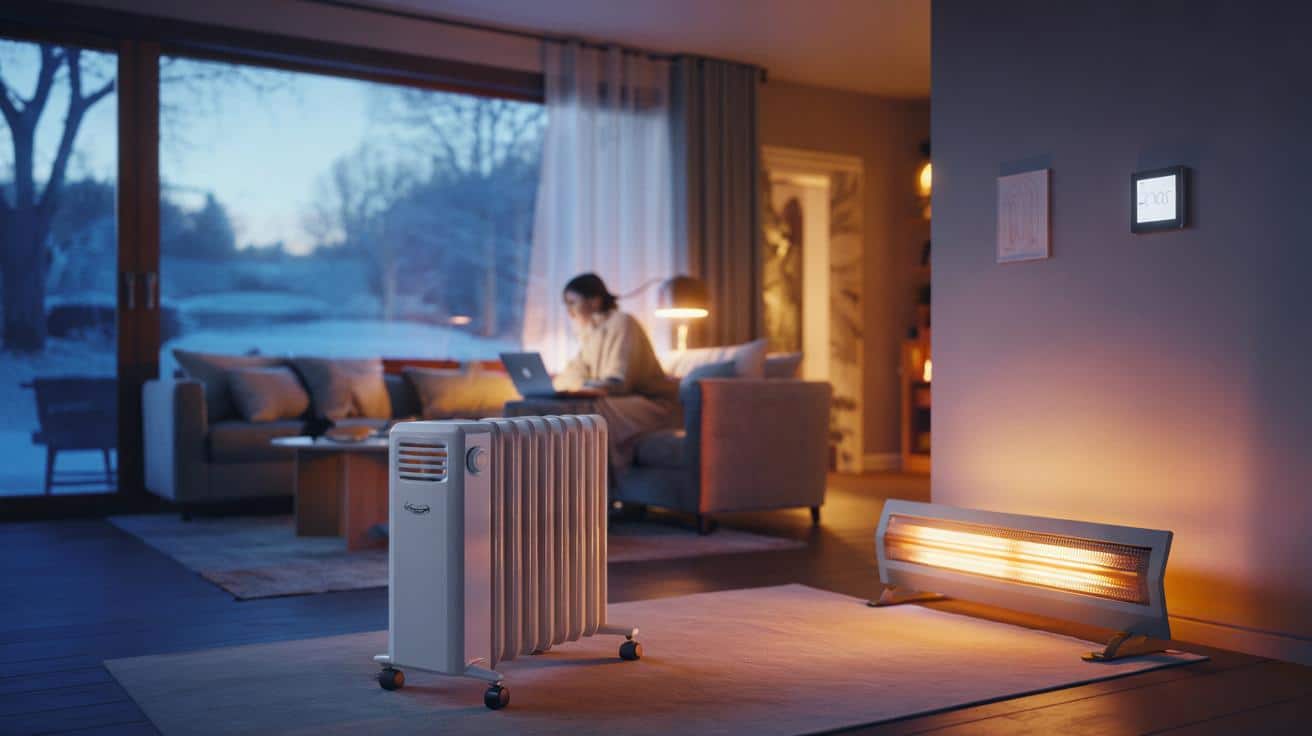
Radiant panels work differently. Instead of mainly heating the air, they emit infrared radiation that warms people, furniture and walls. The effect feels closer to standing in sunshine than in a stream of warm air.
Why radiant heaters feel so pleasant
- The warmth is soft and even, with fewer hot‑and‑cold patches.
- They can be economical in well‑insulated rooms, because warmed surfaces hold heat.
- They’re discreet: slim, often wall‑mounted, with a more modern look.
Limits and conditions
- They usually cost more upfront than basic heaters.
- In badly insulated spaces, much of that radiant warmth dissipates through cold walls or drafts.
- They’re not as instantly “hot” as a fan heater for a sub‑zero bathroom dash.
A radiant panel makes sense when you’ve already improved insulation and want gentle, stable warmth in a living room or bedroom you use daily.
Oil-filled radiators: slow burner, long‑lasting warmth
Oil‑filled radiators heat an internal oil reservoir, which then releases warmth steadily over time. They resemble traditional radiators on wheels, and their key strength is thermal inertia: they stay warm long after switching off.
Strong points of oil-filled radiators
- They deliver soft, consistent heat without scorching the air.
- They’re almost silent, apart from the occasional click of the thermostat.
- Once the oil is hot, they hold temperature well, which can keep running costs in check.
What to keep in mind
- They take time to warm up, typically 10–20 minutes.
- They’re heavier and bulkier than fan heaters, not ideal if you move them constantly.
- Purchase price is usually higher than the cheapest options.
For a home office, a nursery or a living room where you stay for several hours, a quality oil‑filled unit is one of the most balanced choices for both comfort and energy use.
Portable gas and paraffin heaters: strong heat, serious precautions
Portable heaters that burn gas or liquid fuel can transform a cold shed, garage or holiday cabin, especially where electrical power is limited or expensive.
Why people still buy them
- They heat up quickly, even in draughty rooms.
- They work independently of the power grid.
- They can deliver a lot of heat output relative to their size.
Risks and restrictions
- They produce combustion gases, which means you must ventilate the room properly.
- They require regular maintenance and careful handling of fuel.
- Fuel costs can be volatile, and storage needs planning.
Indoor use demands a carbon monoxide detector, strict adherence to safety rules and, in some homes, may clash with building or rental regulations. For regular daily heating in a well‑insulated flat, they’re rarely the best idea.
How the main heater types compare
| Heater type | Warm‑up speed | Comfort level | Energy use trend | Typical role |
|---|---|---|---|---|
| Fan heater | Very fast | Basic | High for long use | Quick bursts in very small rooms |
| Convector heater | Medium | Decent | Medium to high | Occasional heating of a small or mid‑size room |
| Radiant panel | Medium | High | Moderate if room is insulated | Regular, gentle heat in insulated living spaces |
| Oil‑filled radiator | Slow | Very high | Favourable over long sessions | Long‑term heating for occupied rooms |
| Gas or paraffin heater | Fast | Good | Variable, depends on fuel cost | Occasional heat in poorly insulated or off‑grid spaces |
So which heater really balances efficiency and savings?
For most homes where safety, bills and comfort all matter, two families of heaters tend to stand out: radiant panels and oil‑filled radiators. They don’t usually offer the lowest sticker price, but they use energy in a way that better fits modern living.
If you spend hours in the same room, a radiant or oil‑filled heater on a smart thermostat often beats a cheap fan heater on full power.
A radiant panel works well in an already efficient house: good windows, limited drafts, insulated walls. The panel warms surfaces, those surfaces re‑emit heat, and the room stays comfortable even if you run it at a lower setting.
An oil‑filled radiator, by contrast, can be friendlier in older or mixed‑quality homes. You can switch it on 30 minutes before you work or watch TV, then turn it down or off once the oil is hot. The radiator keeps radiating warmth for a while, shaving off running time.
What a realistic winter scenario looks like
Imagine a two‑bed flat with central heating set to a modest 18°C to save money. One room serves as a home office. Without help, it feels chilly, prompting the temptation to crank the whole system up to 21°C.
Instead, you roll in a 1,000‑watt oil‑filled radiator and set its thermostat to maintain about 20°C in that single room. The central heating stays at 18°C in the rest of the flat. The boiler runs less, and the extra electricity from the radiator only covers one room, during working hours.
In that scenario, bills can fall even though one device is adding heat, because you’ve cut waste across the rest of the property. The key is discipline: limit use to rooms you occupy, and avoid leaving the heater on standby in an empty space.
Key terms worth clearing up
Two notions frequently appear on packaging and in adverts: “power” and “inertia”. They sound technical but affect your bill directly.
- Power (watts): tells you how much energy the heater can use at full throttle. A 2,000‑watt heater consumes 2 kWh every hour at maximum setting.
- Inertia: describes how long a device keeps releasing heat once switched off or turned down. Oil‑filled heaters have high inertia; fan heaters almost none.
A lower‑power heater with good inertia can match the comfort of a more powerful unit, as long as the room is not enormous. You may wait slightly longer to feel the warmth, but the total energy consumed over an evening can be lower.
Extra tips to stretch efficiency further
Pairing the right heater with a few simple habits amplifies the gains. Shut interior doors to keep warmth in one room. Use thick curtains at night but leave them open on sunny days so the sun can contribute free heat. Place portable heaters away from windows and not directly under shelves that trap hot air.
Finally, treat manufacturer safety instructions as non‑negotiable. Keep a clear zone around the heater, never dry clothes on it, and check that your extension leads can handle the load. A space heater that works hard but safely, chosen for the right room and used with intention, can make winter energy bills less frightening without leaving you shivering.