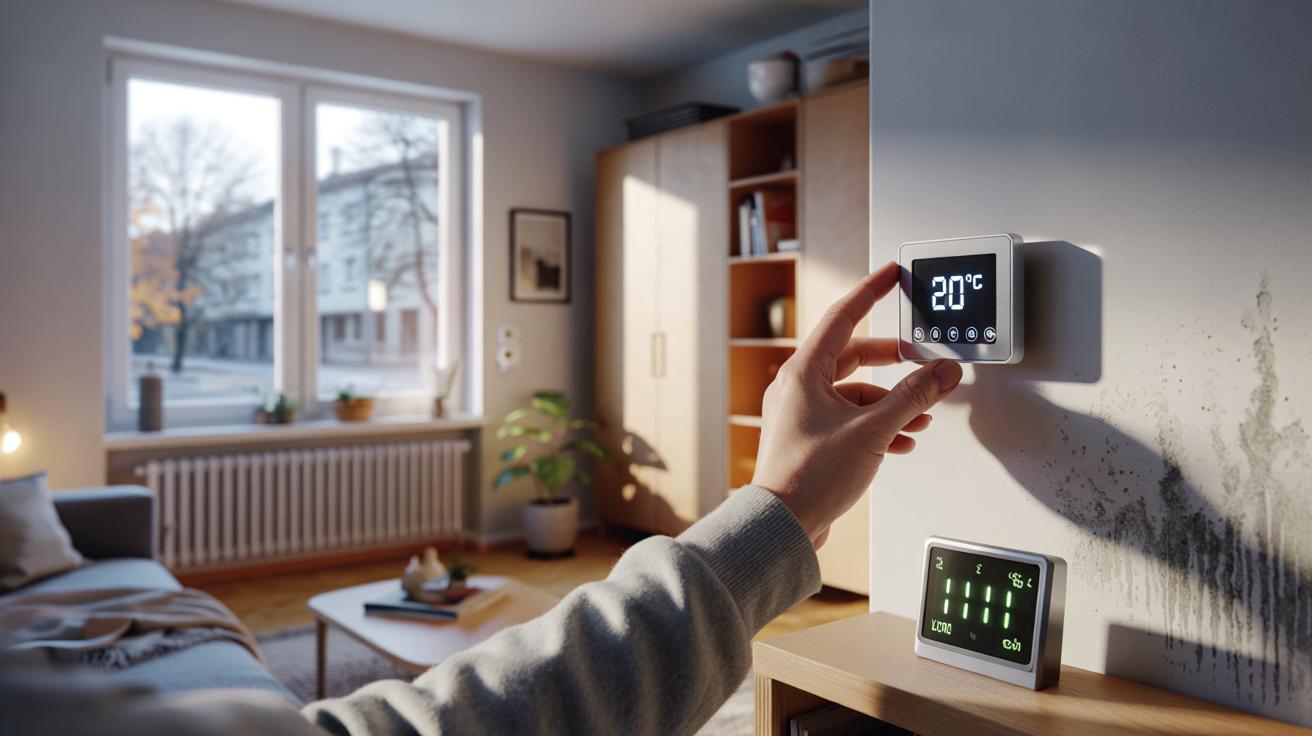
The first cold weekend of autumn hits and, almost by reflex, you twist the thermostat a little higher. The windows mist up as you cook pasta, the kettle whistles, the bathroom is still damp from your shower. You pull your sweater tighter and think, “Cozy.”
Then you notice it. A grey shadow in the corner near the window. A faint musty smell when you open the wardrobe. A dark line along the wall just behind the radiator. Suddenly, the cozy feeling slips away.
You didn’t change much. You just turned up the heating.
Yet something in your home did.
Why your heating setting can quietly invite mold
Most people think mold appears only in ice-cold, abandoned rooms. That’s partly true, but the story is sneakier. Mold loves cool surfaces and moist air, not just “cold rooms” in general. When you heat your home in a patchy or wrong way, you create perfect little traps for condensation.
Warm, humid air meets a cold wall or window. The moisture from your breath, cooking, or shower condenses into tiny droplets. Day after day, those droplets feed invisible spores. One morning you move a piece of furniture and there it is: soft black spots where your warmth never really reached.
Picture a typical winter evening in a German apartment. Living room at 23 °C, bedroom almost turned off “to save energy”, door slightly open. You breathe, sleep, maybe dry some laundry inside because it’s raining outside. By dawn, the bedroom walls are cold, the air is humid, and the window is fogged.
Behind the wardrobe, where air barely circulates, the wall temperature can fall several degrees. That small difference is enough to make moisture condense. You don’t see it, you don’t feel it, you just notice you’re coughing more. Weeks later, you discover a dark, velvety patch hidden behind your clothes.
This is where the thermostat number becomes more than just a comfort setting. Too low, and your walls stay cold, catching every gram of water in the air. Too high and irregular, and you create big temperature swings that stress building materials and still leave cold corners untouched.
Mold isn’t really about dirt or “bad housekeeping”. It’s physics. Warm air holds more moisture than cold air. As soon as that warm, wet air meets a surface that’s much cooler, it drops the excess water there. So the question isn’t only “How warm do I want it?” but **“How warm do my walls need to be to stay dry?”**
The right temperature to set on your heating to avoid mold
Let’s cut to the number most experts quietly agree on. For lived-in rooms, a steady 19–21 °C is the sweet spot to limit mold and still protect your energy bill. Below roughly 18 °C, surfaces tend to cool enough that condensation risk jumps, especially on external walls and window reveals.
So the simple rule: keep main rooms between 19 °C and 21 °C all day long. Not just in the evening when you’re home. Not with wild ups and downs. Your walls need time to warm through, like a slow-baking loaf of bread. Once they’re evenly warm, moisture has fewer cold traps where it can settle.
➡️ Haushalte sollen diese Woche täglich zehn Minuten lüften „warum Experten jetzt dringend dazu raten“
➡️ Der geniale Hoteltrick um Duschwände streifenfrei zu reinigen und wieder glasklar zu machen
➡️ Wie Sie durch achtsames Essen Genuss steigern
Take the classic “Economy mode” story. Someone sets the living room to 22 °C from 6 to 9 p.m., then drops it to 15 °C at night to save money. The room cools down, the walls lose stored heat, the air from the warmer hallway drifts in and condenses at the coldest points. Next winter, they notice mold right behind the sofa on the outside wall.
Another household keeps the living room at 20 °C all day, even when no one’s there, and ventilates briefly but strongly three times a day. Energy use is similar over the month, but the second apartment stays drier. Their walls don’t yo-yo between hot and cold, and the relative humidity stays under that dangerous 60–65 % zone where mold really wakes up.
Energy agencies and building experts across Germany now repeat the same baseline:
around **20 °C for living rooms**, about 18–19 °C for bedrooms, not less than 16–17 °C in rarely used rooms. Those “cold” rooms matter because damp air flows freely through the flat. If one room is a fridge, the moisture from warmer rooms will stick to its walls.
Let’s be honest: nobody really checks wall surface temperatures every single day. Yet the principle is simple: small differences matter. A bedroom at 17 °C with a big wardrobe against an outside wall is already a risk if the air stays humid. *The safer strategy is steady, moderate warmth everywhere, not extreme heat somewhere and deep cold next door.*
Daily habits that protect your home from mold
Start with one practical combination: stable temperature plus short, sharp ventilation. Programm your heating so main rooms stay around 19–21 °C, even during work hours. Then open windows fully for 5–10 minutes, two to four times per day, rather than tilting them all day long.
This “Stoßlüften” flushes moist indoor air out without cooling the walls too much. Aim especially after showers, cooking, and drying laundry. If the windows fog in the morning, open them wide until the glass clears. That’s your quickest visual clue that you’ve really expelled moisture instead of just chilling the room.
Many people, with the best intentions, fall into the same traps. Turning the heating completely off in unused rooms. Leaving internal doors open so warm, moist air from the kitchen or bathroom drifts into cooler bedrooms. Pushing furniture tight against external walls, so no air can circulate behind it.
If you recognize yourself in any of these, you’re not alone. We’ve all been there, that moment when we think we’re saving money while secretly feeding a small jungle in the plaster. Try to keep at least 5–10 cm distance between wardrobes and outside walls. Use the lowest radiator setting instead of “off” in side rooms, so they don’t drop below roughly 16–17 °C.
Sometimes, a heating technician summed it up perfectly to a customer: “You’re not just heating the air, you’re heating the building structure. Warm walls are your best anti-mold insurance.”
- Target temperatures
Living rooms: 19–21 °C. Bedrooms: 18–19 °C. Unused rooms: not below 16–17 °C. - Ventilation rhythm
2–4 times daily, 5–10 minutes with windows fully open, especially after moisture-heavy activities. - Furniture placement
Leave a small gap to external walls; avoid pressing wardrobes or sofas directly against cold surfaces. - Humidity check
A simple hygrometer (often under 20 euros) helps keep relative humidity in the 40–60 % comfort zone. - Heating strategy
Prefer steady, moderate heat over extreme day–night drops that cool walls and invite condensation.
A warmer home, a calmer mind
Once you see mold as a temperature and humidity story, your heating dial looks different. It stops being just a comfort versus money fight and turns into a quiet regulation tool. A way to keep your walls gently warm, your windows less foggy, your air a bit easier to breathe.
You don’t need a smart home system with 100 sensors to start. One or two thermometers, maybe a cheap hygrometer, and a close look at the coldest corners of your flat already tell you a lot. If the outer wall behind your bed always feels icy while the room is at 21 °C, that’s a sign to rethink layout, temperature, or both.
There’s also the emotional side. Mold is not only an aesthetic problem; it can trigger allergies, headaches, conflict with landlords, even shame when guests visit. Adjusting your heating to around 19–21 °C, ventilating consciously, and avoiding extreme cold rooms gives you a sense of control. You’re not just reacting to black spots after they appear, you’re quietly preventing them.
Every winter, people discover new patches and wonder what they “did wrong”. Maybe you’ve had that moment too. The real shift starts the day you decide that your thermostat is not the enemy of your wallet, but a tool to keep your home healthier, room by room, degree by degree.
| Key point | Detail | Value for the reader |
|---|---|---|
| Recommended room temperatures | 19–21 °C in living rooms, 18–19 °C in bedrooms, minimum 16–17 °C in unused rooms | Clear targets to reduce condensation and mold risk without overheating |
| Ventilation strategy | Short, wide-open bursts 2–4 times daily instead of long tilted windows | Keeps walls warm while removing humid air quickly and efficiently |
| Furniture and humidity | Keep distance from cold walls, track humidity around 40–60 % | Prevents hidden mold behind furniture and supports a healthier indoor climate |
FAQ:
- What exact temperature should I set to avoid mold?
For most homes, aim for 19–21 °C in living areas and around 18–19 °C in bedrooms. The key is stability, not peaks. Try not to let any room drop below 16–17 °C for long periods.- Is it bad to turn the heating off completely at night?
Turning it completely off can cool walls too much, especially outer walls. A small night setback of 1–3 degrees is usually fine, but deep drops increase condensation risk.- Can I save energy by heating just one room and leaving doors open?
This often backfires. Warm, moist air from the heated room moves into cooler rooms, where it condenses on cold walls. Better to keep all rooms moderately warm with doors mostly closed.- Does a dehumidifier replace proper heating?
No. A dehumidifier helps lower humidity, but cold walls can still attract moisture. You need both: reasonable temperatures and controlled humidity for real mold prevention.- How do I know if my home is at risk for mold?
Watch for persistent window condensation, musty smells, and cold, clammy outer walls. A small hygrometer will show if humidity often climbs above 60–65 %, which is a warning sign.