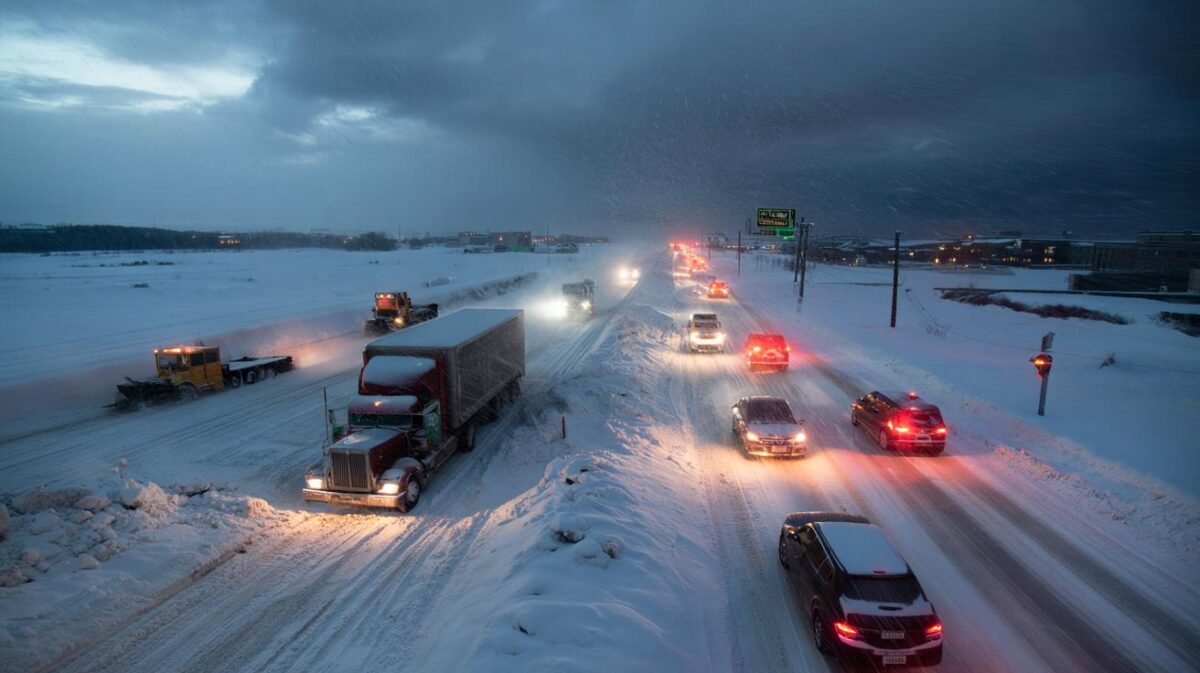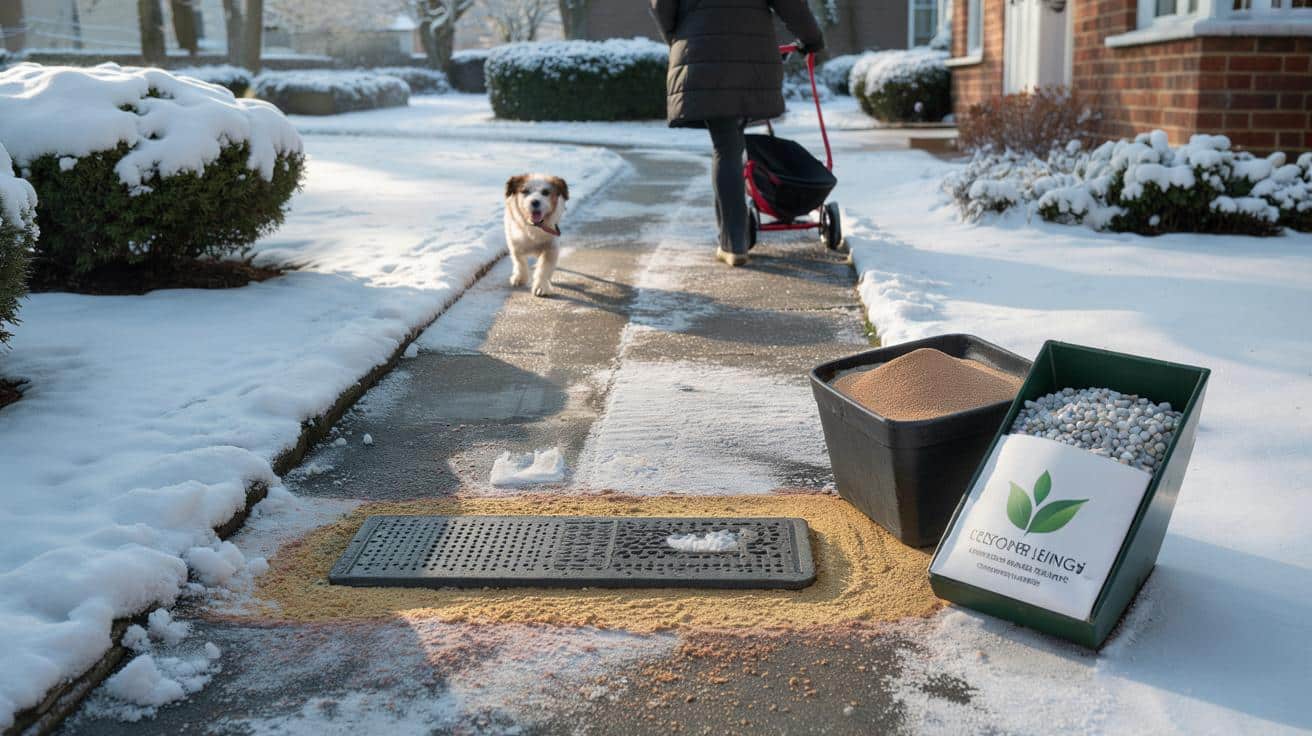
Across the UK, Europe and North America, more households are questioning whether scattering salt on every slippery step really makes sense for pets, soil and waterways. A quieter shift is under way: people are testing greener ways to keep paths walkable without turning their gardens and drains into brine pools.
Why move away from rock salt on pavements
Traditional road salt, usually sodium chloride, works well at melting ice around 0 °C, but it comes with trade‑offs that often stay hidden.
Salt can seep into soil, stressing trees and hedges that line residential streets. It also gets washed into rivers, pushing up salinity and affecting aquatic life. On a smaller scale, it irritates dog paws, stains boots, and can chew into concrete over time.
Switching to greener methods is less about perfection and more about cutting the sheer volume of salt scattered every winter.
The goal is not to ban salt overnight, but to build a toolkit: some products that melt ice efficiently at lower temperatures, and others that simply boost traction so you stay upright even when the ice stays frozen.
Two strategies for safe winter pavements
Most eco‑conscious winter care falls into two broad strategies: melting the ice or increasing grip.
Melting agents versus traction materials
Melting agents break the bond between ice and the pavement. They either lower the freezing point of water or prevent ice crystals from sticking to the ground. Traction materials, by contrast, do not melt anything: they create roughness so shoes, tyres and pram wheels can grip.
- Melting agents: calcium chloride, magnesium chloride, calcium magnesium acetate, beet brine and homemade brine solutions.
- Traction materials: sand, wood ash, fine gravel or grit, crushed granite, wood chips.
In very low temperatures, melting can be slow or costly, so traction tends to win. On milder days or on steps where you cannot afford a fall, a melting agent often makes sense.
Anti‑bonding as a third lever
A third tactic sits between the two: anti‑adhesion. By treating the surface before snow falls, you make it harder for snow and ice to stick. That means less scraping later and fewer chemicals overall.
➡️ Zehn gemüse trotzen dem dauerregen und spalten die gartengemeinde
➡️ Von den Sternen begünstigt: die glücklichsten Sternzeichen vom 10. bis 20. Oktober
➡️ Glücklicher durch Wissenschaft: Was neue Erkenntnisse der Hirnforschung über Zufriedenheit verraten
Pre‑treating with a light brine turns stubborn, compacted ice into slush that lifts off with a shovel rather than a chisel.
Local authorities across Canada and Scandinavia already use this logic on roads. There is nothing stopping householders from borrowing the same idea for their front steps.
Gentler de‑icers: calcium, magnesium and plant‑based brine
Among chemical de‑icing products, a few stand out as more efficient at low temperatures and less punishing for concrete and greenery than plain rock salt.
Calcium chloride: fast action in deep cold
Calcium chloride (CaCl₂) is a powerful ice‑melt widely used in commercial settings. It attracts moisture from the air and releases heat when it dissolves, so it starts working fast and keeps going down to around −32 °C (−25 °F).
Because it is so effective, you can often use smaller amounts than with standard salt. Bags are more expensive, but the per‑use cost narrows when you apply it sparingly, following the dosage on the packaging.
Magnesium chloride: gentler on paws and plants
Magnesium chloride (MgCl₂) works down to roughly −23 °C (−10 °F) and tends to be less harsh on vegetation and animal paws than sodium chloride. It leaves fewer gritty residues, which is a bonus near doorways.
For households with dogs or front gardens close to the pavement, magnesium‑based products can be a reasonable compromise between safety and environmental concern.
Calcium magnesium acetate: the anti‑stick specialist
Calcium magnesium acetate, often shortened to CMA, acts differently. Rather than aggressively melting thick ice, it focuses on stopping snow and ice from bonding to the surface.
CMA is often used as a preventative film, making it easier to scrape away slush before it hardens into a sheet of ice.
Because it is made from acetic acid (related to vinegar) and mineral salts, CMA typically breaks down into components that are less problematic for soil and waterways than chloride‑heavy options. It is often more expensive, so many users reserve it for stairs, ramps and other high‑risk spots.
Beet brine and homemade saline solutions
Beet brine, made from sugar beet by‑products mixed with a small amount of salt, has become a quiet favourite for councils and farmers. The organic material helps the solution stick to the ground and can extend salt’s effectiveness at lower temperatures.
For home use, a light spray of beet‑based brine before a snowfall can limit bonding and reduce the amount of solid de‑icer needed later. It should be used with care around freshly poured concrete and not poured in large quantities into flower beds.
Householders can also make a simple salt brine by dissolving table salt or road salt in warm water. Sprayed sparingly, it prevents hard ice build‑up so shovelling stays manageable, even after a freeze–thaw cycle.
A quick DIY mix for thin ice
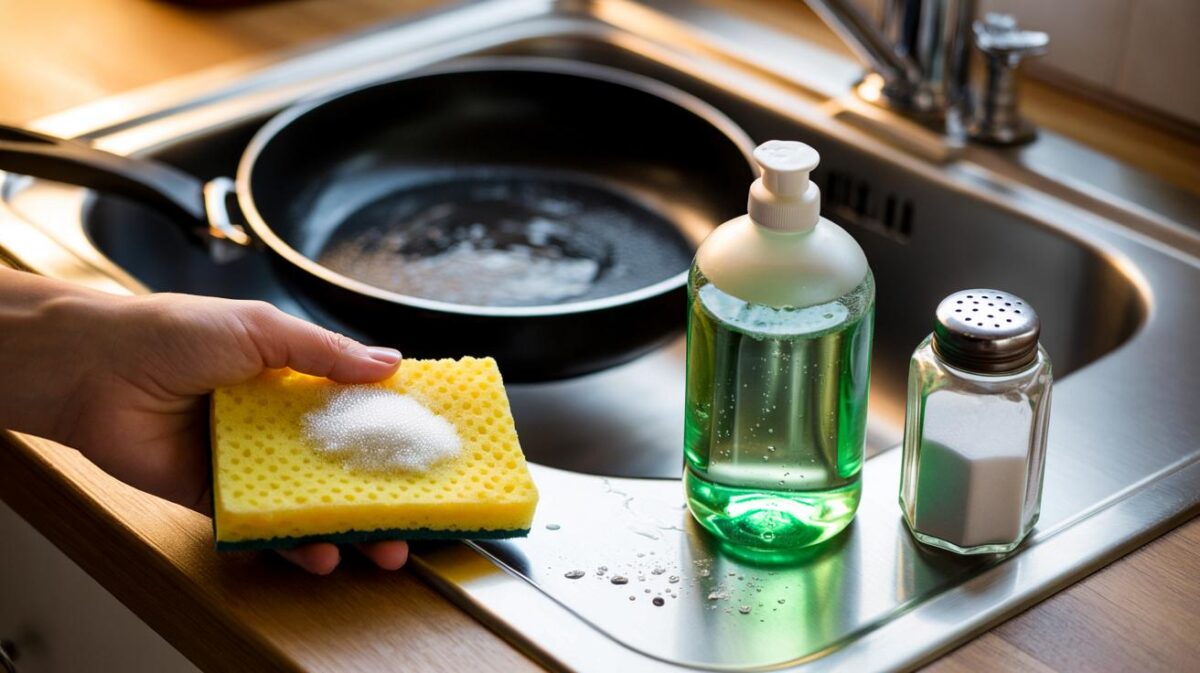
For a thin glazed layer on steps or a small porch, a basic homemade mix can help: warm water, a drop of washing‑up liquid and a splash of rubbing alcohol. The soap reduces surface tension and adhesion, the alcohol pushes down the freezing point, and the warm water gives a short‑lived head start.
This kind of DIY mix suits small surfaces and emergencies, not whole driveways, because the liquid can quickly refreeze if misused.
Traction‑based solutions: grip without melting
Where sustained cold makes melting inefficient, or where you want to protect nearby plants, traction materials step forward. They leave the ice mostly intact but make it far less slippery.
Sand, ash and grit for everyday streets
Sand remains the classic choice. It is cheap, widely available and offers instant grip. Darker sand grains also absorb sunlight, which can help soften ice slightly in daytime.
Wood ash from clean, untreated logs can also be scattered on paths. It improves grip, adds a bit of colour contrast so you can see icy patches, and costs nothing if you already use a wood burner. Ash does add nutrients to soil, but large amounts can raise pH, so a light hand near flower beds makes sense.
Chicken grit or traction grit, often made from crushed granite or small stones, is another option. It clings well to icy surfaces and typically survives several freeze–thaw cycles without turning to mush.
Wood chips and longer‑lasting traction
For garden paths, wood chips offer a rustic approach. They bite into ice, resist being blown away, and do not track into the house as badly as loose sand.
On heavily used pavements, though, chips can move underfoot and should be applied in thin layers only. They work best on secondary paths rather than steep front steps.
Technical options: heated mats and warm driveways
Beyond bags and shovels, a small but growing market caters to those who prefer plug‑in solutions.
Heated mats for steps and landings
Heated rubber or synthetic mats can be laid on front steps or short paths and connected to a standard outdoor socket. When snow falls, you switch them on and they keep the surface clear of ice.
For older residents or people with mobility issues, a heated mat on the front step can mean the difference between independence and being housebound.
The obvious trade‑off is electricity use and upfront cost. Mats may not suit long driveways, but for the few metres between the door and the pavement, they can be a practical balance between safety and effort.
Heated driveways: comfort with a price tag
Some homeowners invest in in‑ground heating systems beneath new driveways or patios. Pipes carrying warm fluid or electric cables run under the surface, melting snow as it lands.
These systems remove the need for shovelling in high‑snowfall regions and avoid chemical runoff. At the same time, installation costs are high, retrofitting is disruptive, and the environmental footprint depends heavily on how the electricity or heat is produced.
How the options compare in everyday use
| Method | Main benefit | Main concern | Best use |
|---|---|---|---|
| Calcium chloride | Very effective in deep cold | Cost and potential impact on soil if overused | Steps and steep paths in severe frost |
| Magnesium chloride | Gentler on paws and plants | Still a chloride, needs moderation | Residential pavements near gardens |
| CMA | Prevents bonding, easier shovelling | Higher price per kilo | High‑risk areas and preventative treatment |
| Sand / grit | Instant traction, no melting required | Mud and clogged drains if not cleaned up | Very cold spells, shaded pavements |
| Beet brine | Improves salt performance, sticks to surface | Can be messy and unsuitable on fresh concrete | Pre‑treating before forecast snow |
Practical tactics for a greener winter routine
For most households, the most realistic approach is a combination of prevention, prompt shovelling and targeted use of products.
A simple three‑step plan
First, clear snow early, before it compacts underfoot and turns to ice. A ten‑minute job with a shovel can prevent hours of hacking at frozen ridges later.
Second, spread a small amount of anti‑adhesion product or brine ahead of a big freeze if forecasts allow. This keeps the remaining layer loose.
Third, use traction materials like sand or grit on stubborn patches instead of repeatedly dousing them with salt.
Small habits – like keeping a bucket of sand by the door or checking the forecast the night before – often cut de‑icing needs more than expensive products do.
Pets, prams and neighbours: who benefits most
Eco‑friendlier practices do not only help plants. Dogs that walk daily on salted pavements can suffer cracked pads and irritation between their toes. Clearing snow and favouring magnesium‑based products or grit can ease that discomfort.
Parents pushing prams, carers wheeling patients and neighbours using walking frames also notice the difference between a smooth, icy slope and a sandy, textured path. Traction materials give wheels something to bite into.
Key terms and real‑life scenarios
Two pieces of jargon often confuse people: “freeze–thaw cycle” and “refreeze”. Freeze–thaw refers to the daily rhythm of melting in daylight and refreezing overnight. Each cycle can weaken concrete and create fresh black ice as thin water films solidify again.
Refreeze happens when melted snow or ice, often liquefied with a de‑icer, flows to a lower spot and then freezes again as temperatures drop. This can shift risk from one place to another, for example from a step to a pavement edge.
Imagine a typical suburban terrace in Manchester. Snow falls in the late afternoon. One resident shovels quickly, lays a little sand and uses a dash of CMA on the top step. By morning, the path is slushy but safe. Next door, nothing is done until the snow has been trodden flat. A layer of rock salt goes on late at night, melts some ice, which then refreezes into ridges at the kerb. At 7 a.m., that neighbour steps onto the kerb, hits the new ridge and slips.
The difference lies less in the products and more in timing, moderation and a willingness to treat ice as a predictable, manageable risk rather than a last‑minute surprise.
As winters grow more erratic, with sudden thaws and flash freezes increasingly common, that mindset shift matters. A thoughtful mix of greener de‑icers, solid shovelling habits and traction tricks can keep pavements walkable, pets comfortable and gardens alive, without relying on mountains of salt dumped at the first sign of snow.