Instead of attacking frozen soil with spades and rotavators, a growing number of gardeners are piling up cardboard, leaves and kitchen scraps, betting on a low-effort technique with surprisingly high returns: lasagna gardening.
Back-saving beds: when gardeners put the spade away
The traditional picture of a gardener is not exactly glamorous: bent double, wrestling with heavy soil, praying for the back pain to ease by Monday. That image is beginning to fade.
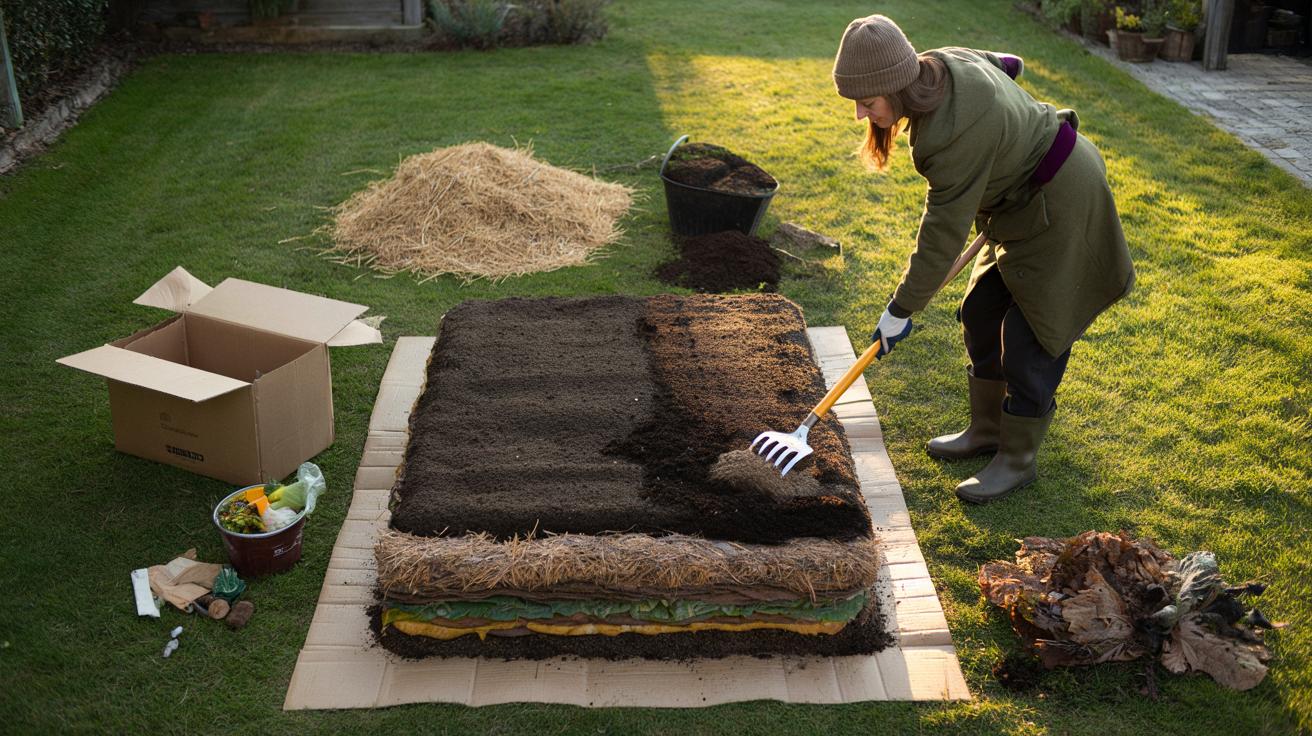
Lasagna gardening, also known as sheet composting, flips the script. You stop digging and start building upwards. The bed is created layer by layer on top of the existing ground.
Lasagna gardening replaces deep digging with stacked organic layers, cutting out one of the toughest jobs in the garden.
By skipping the annual “turning of the soil”, gardeners dodge a major source of back strain. There is no need to lift and twist repeatedly with a loaded spade. Even a basic raised bed frame is optional: many simply mark out a rectangle and start layering.
This shift is not just about comfort. Frequent digging disrupts the soil’s underground architecture. When you flip soil, microbes that live near the surface get buried deep, and organisms adapted to darker, deeper layers are suddenly exposed to air and light. Earthworm tunnels collapse. Fungal networks are sliced through.
With lasagna gardening the living structure of the soil stays largely intact. The new material goes on top and slowly blends down, rather than being violently mixed. That means better long-term aeration, steadier moisture, and a more resilient ecosystem under your feet.
How a lasagna bed works: kitchen, cardboard and science
The name may sound like a gimmick, but the method is grounded in basic composting science. The idea is to recreate what happens on a forest floor, where falling leaves build a dark, crumbly layer over time.
In practice, a lasagna bed is a stack of different organic materials laid down in alternating layers. Gardeners talk about “browns” and “greens”:
➡️ This Boeing 737 looks like no other you’ve ever seen – it’s been rebuilt for Canada’s Arctic
➡️ So nutzen Sie Kakaobutter für intensive Pflege und machen Ihre Haare weich, selbstgemacht
➡️ Revalorisierung der Renten: Was die angekündigte Erhöhung um 5,2 % für Rentner wirklich bedeutet
- Browns (carbon-rich): plain cardboard, straw, dead leaves, shredded paper.
- Greens (nitrogen-rich): vegetable peelings, coffee grounds, fresh grass clippings, green plant trimmings.
These components feed a whole community of fungi, bacteria and invertebrates. The bed warms slightly as decomposition begins, then cools as it settles into a rich, dark mix.
A lasagna bed is essentially a slow, cold compost heap laid flat, designed to become a ready-made planting area by spring.
The basic recipe for a winter lasagna bed
Every garden is different, but a typical late-winter build might look like this:
| Layer | Material | Role |
|---|---|---|
| 1 (bottom) | Wet cardboard sheets | Suppresses existing grass/weeds, holds moisture |
| 2 | Thin layer of “greens” (peelings, coffee, grass) | Supplies nitrogen, kick-starts microbes |
| 3 | Leaves, straw or shredded paper | Adds structure, absorbs excess moisture |
| 4 | Another “greens” layer | Balances carbon-heavy layers above and below |
| 5 (top) | Compost, mature manure, or garden soil | Contact layer for planting and seed sowing |
These layers can be repeated to reach a height of 20–30 cm. By late spring the stack will have sunk and transformed into a loose, dark substrate that feels like shop-bought compost underfoot.
From bin to bed: turning rubbish into “brown gold”
What really attracts many gardeners is the way lasagna gardening changes how they see waste. Cardboard packaging, leaf piles and carrot tops stop being a disposal problem and start looking like free resources.
The only firm rule is to stick to plain, non-glossy cardboard and avoid heavy inks, tape and plastic. Most online delivery boxes are fine once labels and tape are removed. Kitchen waste like fruit and veg peelings, tea bags without plastic, and coffee grounds all slot neatly into the “green” category.
For households drowning in boxes and peelings after Christmas, a lasagna bed is a practical outlet, not just a gardening trend.
This approach has a side-effect: fewer car trips to the tip. Instead of stuffing the boot with bags of prunings or bulky cardboard, gardeners are leaving that material on site. That cuts fuel use and time spent in traffic queues at the recycling centre.
Why late winter is the sweet spot
Lasagna gardening can technically start any time, but a late-winter build has clear advantages. Decomposition is slow in cold conditions, so you want a head start before planting season.
Winter weather actually helps. Persistent rain and occasional snowmelt soak the cardboard and upper layers. That softens them and makes them easier for fungi and bacteria to invade. In midsummer, you’d have to pour on watering cans to get the same effect.
Building in January or February gives the bed two to three months to settle before tomatoes, courgettes and salads move in.
By April or May, the stack usually has sunk noticeably. The layers are less distinct, the texture more unified, and temperatures are rising just as the soil life really gets going. Gardeners can then plant directly into the surface layer, often without any further preparation.
Let the soil life do the heavy lifting
Once the layers are in place, the real workers arrive. Earthworms are among the first to move in, entering from the soil beneath. They feed on the softer materials in the lasagna and drag fragments downwards.
Their activity creates countless tiny channels that act like vertical drains and air vents. Water seeps in rather than rushing off the surface. Roots can follow these pre-made pathways deep into the ground.
At the same time, fungi thread their way through the cardboard and leaf litter, breaking down tougher fibres. Bacteria take on smaller particles. Together, they convert raw waste into humus: the dark, spongy substance that underpins healthy soil.
A mature lasagna bed behaves like a sponge, soaking up spring rain and holding it for summer, just when plants need it most.
With more frequent dry spells and hosepipe bans in parts of the UK and US, this water-holding capacity is becoming a serious reason to adopt the method, not just an extra perk.
Weed control and faster spring warm-up
Weeds are often what push beginners to give up on gardening. A lasagna bed tackles that head-on. The first layer of thick, overlapping cardboard blocks light from reaching the soil. Grass and many common weeds below gradually die and rot.
Some deep-rooted perennials can still find a way through, but far fewer than in a traditionally dug bed. Pulling the odd survivor is nothing compared with tackling a full carpet of couch grass or dandelions.
Because lasagna beds sit slightly above ground level, they warm more quickly in the first sunny weeks of spring. That gives an advantage for early salads, peas or hardy herbs. The surface dries faster after rain, making it possible to plant during short weather windows when neighbouring plots remain claggy and unworkable.
A different gardening mindset: less force, more timing
Behind the cardboard and peelings lies a deeper shift in attitude. Lasagna gardening invites people to stop fighting the soil and start working with its natural cycles.
Instead of burning calories on repeated digging and weeding, effort moves to two key moments: building the bed in late winter and planting in spring. In between, the main job is waiting and occasionally topping up with new organic matter.
For time-poor gardeners, the appeal is clear: a few hours of stacking waste today can translate into months of lower maintenance tomorrow.
The nutritional side is attractive too. As the different layers break down at varying speeds, they release a slow stream of nutrients. Many gardeners report strong growth without needing extra fertiliser, especially in the first couple of years.
Practical tips, risks and real-world scenarios
Lasagna gardening is forgiving, but not completely foolproof. A few pitfalls tend to crop up:
- Layers too dry: decomposition stalls; beds stay coarse. In a dry spell, an occasional watering helps restart activity.
- Too much “green” material: can lead to a slimy, smelly layer. Adding more leaves, straw or shredded cardboard balances it out.
- Rodents and slugs: thick, warm layers can attract them. Keeping the top layer as finished compost, not food scraps, reduces that draw.
For small urban gardens or rented properties, the method also sidesteps heavy alterations to the existing soil. A bed can be set up on compacted ground, old lawn or even on top of an area with poor subsoil. In theory, it can be dismantled in future, leaving less of a trace than a deeply dug vegetable patch.
Some gardeners combine lasagna beds with other low-till practices such as mulching paths with wood chips or sowing cover crops around the edges. Over several years, these practices can transform previously hard or lifeless plots into dark, crumbly ground that stays productive with little intervention.
Key terms worth knowing
Two ideas sit at the heart of lasagna gardening:
- Humus: not the chickpea spread, but the stable, dark fraction of decomposed organic matter that boosts fertility and water retention.
- Cold composting: a slow, low-temperature breakdown of materials. It releases fewer smells and demands less turning than hot compost heaps, but takes longer.
For gardeners looking ahead to spring while staring at a bleak February plot, lasagna gardening offers a concrete project. It turns winter’s damp, grey days into preparation time, and asks the soil’s unseen army of organisms to handle the hardest work.