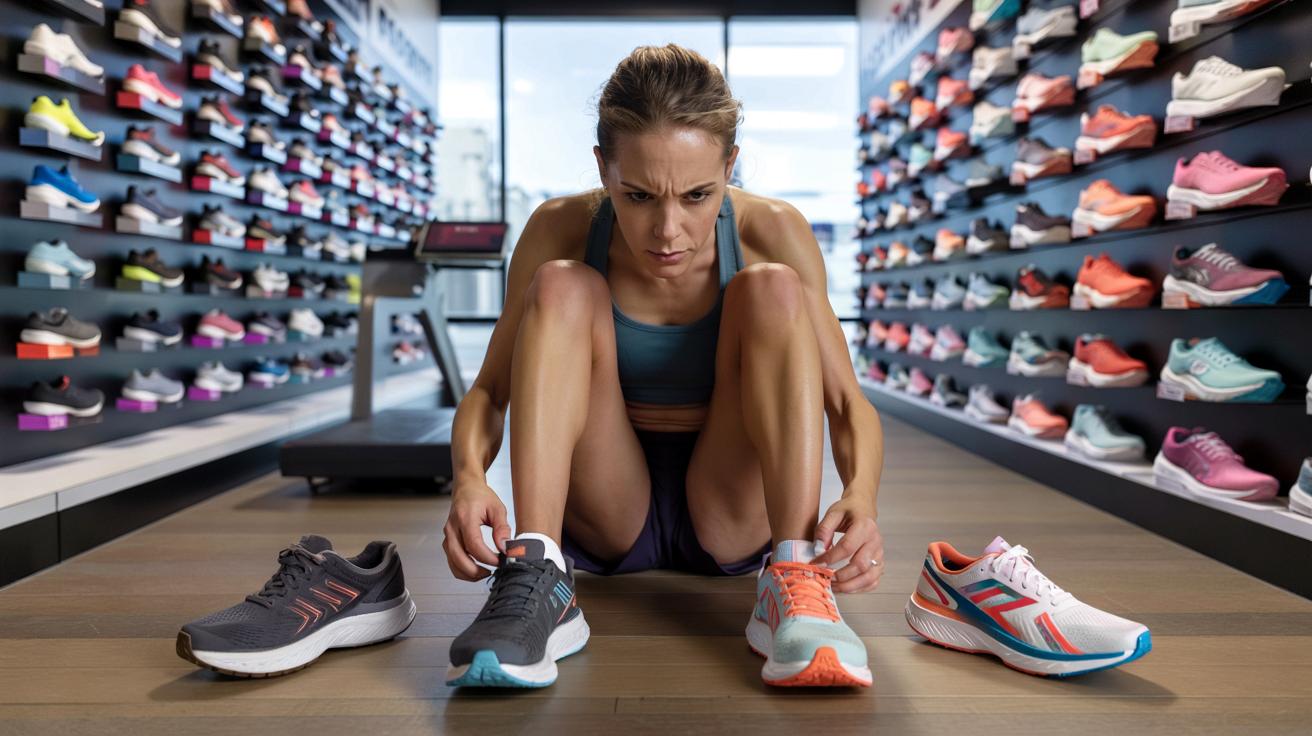
Behind glossy campaigns and pink colourways, new research suggests that nearly one in two “women’s” running models are still based on a male foot, simply scaled down. For millions of runners, that quiet design shortcut could be shaping comfort, injury risk and performance far more than they realise.
How women ended up running in “shrink it and pink it” shoes
Modern running shoes are built around a 3D mould called a “last”. This shape defines the width, curve and volume of the shoe. For decades, brands have relied on a last based on a typical male foot, then reduced the size and changed the colours for the women’s range.
Most so‑called women’s models are not women-specific; they are smaller men’s shoes with femmed-up aesthetics.
A study reported in BMJ Open Sport & Exercise Medicine flags this as a long-standing design bias. Midsole foams, carbon plate geometry, stack heights and heel-to-toe drop were historically tuned and tested on male runners, who tend to be heavier and have different biomechanics.
That legacy still shapes what is on the wall of your local running shop. In France, women already make up 49% of the 12.4 million people who run. Yet the research team argues that their feet and running patterns are still treated as an afterthought, not the starting point.
Female feet are not just smaller male feet
Biomechanics labs have documented several consistent differences between male and female feet and running styles. These differences are not cosmetic; they influence how a shoe should be built.
- Women tend to have a proportionally wider forefoot.
- The heel is often narrower relative to the rest of the foot.
- The midfoot (the area over the arch) can be higher.
- Stride cadence is usually higher, with shorter ground contact time.
Each of these factors changes how load is distributed across the sole and upper. A wider forefoot needs room to splay on impact. A narrower heel needs secure grip to avoid slipping and blisters. A higher midfoot can feel crushed under a low, tight upper. And a different cadence alters how cushioning and plates respond under repeated impact.
When these parameters are ignored, even high-tech shoes can feel oddly wrong for women: sloppy at the heel, cramped at the toes, unstable on corners, or dead and unresponsive during tempo runs.
What women runners say they actually need
The BMJ-backed work included in-depth interviews with 21 women aged 20 to 70, ranging from recreational runners to competitive athletes, logging 30–45 km per week. Their priorities were clear and surprisingly consistent.
➡️ Ihre Lieblingsfarbe sagt viel über Ihre Persönlichkeit aus laut Psychologie
Comfort came first, then injury prevention, with performance only in third place for most women.
Many of the runners described an ideal shoe with:
- a roomier toe box that lets the forefoot spread out
- a snug, locked-in heel to prevent rubbing and sliding
- generous cushioning that still feels stable at different speeds
- midfoot support adapted to their distances and training volume
Carbon plates, often marketed as the pinnacle of performance, did appeal to competitive runners. Yet they came with a clear condition: no sacrifice in comfort or stability. A carbon super-shoe that feels harsh or wobbly will sit in the wardrobe, no matter how fast it looks on Instagram.
Bad fit, real consequences: from blisters to altered gait
Ill-fitting shoes do more than cause mild discomfort. Poor fit leads to slipping, pressure points and blisters, which can quietly change the way someone runs. To avoid pain, runners will often shorten their stride, alter foot strike or land more cautiously, loading different tissues.
Researchers highlight a paradox: across some datasets, women show a slightly lower overall risk of running injury than men. Yet when shoes do not fit properly, footwear-related injuries appear proportionally more frequent in women.
An incorrect fit is not just annoying; it nudges the body into compensations that can echo up the kinetic chain.
That means more stress on knees, hips or lower back, especially during higher weekly mileage or speed work. Over time, this can translate into plantar fasciitis, Achilles issues or metatarsal pain that many runners simply accept as “part of the sport”.
How to choose a running shoe that actually fits a woman’s foot
Based on the study and broader sports medicine advice, several checks make sense before handing over your card at the till.
| Area | What to look for |
|---|---|
| Toe box | Enough space to wiggle toes, no pressure on the sides of the forefoot, a thumbnail of room at the front. |
| Heel | Secure hold with no vertical slipping when walking or jogging in the shop. |
| Midfoot | Comfortable wrap without pinching; arch support that feels present but not intrusive. |
| Cushioning | Feels pleasant at easy pace and still responsive when you pick up the speed. |
| Stability | No sense of rolling outwards or inwards on corners; midsole does not twist excessively. |
Trying multiple models matters far more than brand loyalty. A good specialist retailer can watch your gait on a treadmill or in the street and suggest shapes that suit your foot type and mileage. For those who feel uncomfortable in-store, filming a short clip of your stride outside and reviewing it at home can also highlight obvious heel slippage or collapse.
Pregnancy, ageing and how women’s feet keep changing
Feet are not static. During pregnancy, hormonal changes and added load alter the ligaments and arches. Many women see their feet lengthen and widen, while the arch drops slightly and overall stiffness decreases.
For runners who stay active through pregnancy or return postpartum, that means previous favourites can suddenly feel tight, unstable or too harsh. The women in the study stressed a growing need for extra support, more width and better lateral stability during and after pregnancy.
A woman can move through several foot shapes and support needs in a single decade of running.
Age adds another layer. As the years go by, soft tissue cushions under the heel and forefoot thin out. Recovery can take longer. Priorities often shift towards deeper cushioning, strong heel hold and reliable midfoot support, rather than aggressive racing geometry.
Researchers argue that brands should treat stages such as pregnancy, post-partum and later life as specific design briefs, not side notes. That would mean women-focused product lines, not just new colourways on an old last.
Are brands finally building women-first running shoes?
Some companies have started talking about “women-first” design, investing in female-specific lasts and studying women’s biomechanics in their own labs. That can include reshaping the heel cup, widening the forefoot and adjusting midsole stiffness to lighter body weights and different loading patterns.
Yet marketing moves faster than engineering. A shoe described as “designed for her” is not always built on a genuinely different last. Runners can ask directly: is this model based on a women’s last or just a scaled-down men’s version? Staff may not always know, but when they do, the answer is eye-opening.
For now, the best approach combines scepticism with experimentation: use brand claims as a starting point, then trust what your feet tell you after a proper test jog.
Key terms that help when talking to shoe experts
A few bits of jargon can make conversations with shop staff or physios more productive.
- Last: the 3D mould that defines the shape of the shoe; women-specific lasts are wider at the forefoot and narrower at the heel.
- Stack height: how much foam sits under your foot; higher stacks feel softer but can be less stable for some runners.
- Drop: the height difference between heel and forefoot; a higher drop can ease strain on the calf and Achilles, while a lower drop encourages a flatter foot strike.
- Toe box: the front part of the shoe that surrounds the toes; cramped boxes are a frequent cause of black toenails and numbness.
- Carbon plate: a stiff insert that helps store and return energy; powerful for racing, but not always comfortable for daily training.
Practical scenarios: adjusting shoes across a running life
Imagine a runner starting in her early twenties with neutral feet and 20 km per week. She might feel great in a light, moderately cushioned trainer on a women’s last. A decade later, training for half marathons at 50 km per week, she may want more cushioning and a slightly wider forefoot to accommodate some natural foot spread.
During pregnancy, she could size up by half or a full size, choose a more stable midsole and prioritise a supportive upper. Post-partum, as ligaments gradually regain tension, she might adjust again, perhaps returning to a lighter, more responsive shoe while keeping that extra width.
This kind of progression illustrates why static shoe categories often fall short. Women’s bodies, workloads and goals evolve. Running shoes that genuinely keep up with those shifts are not a luxury add-on; they are a straightforward way to reduce discomfort and keep people in the sport longer.