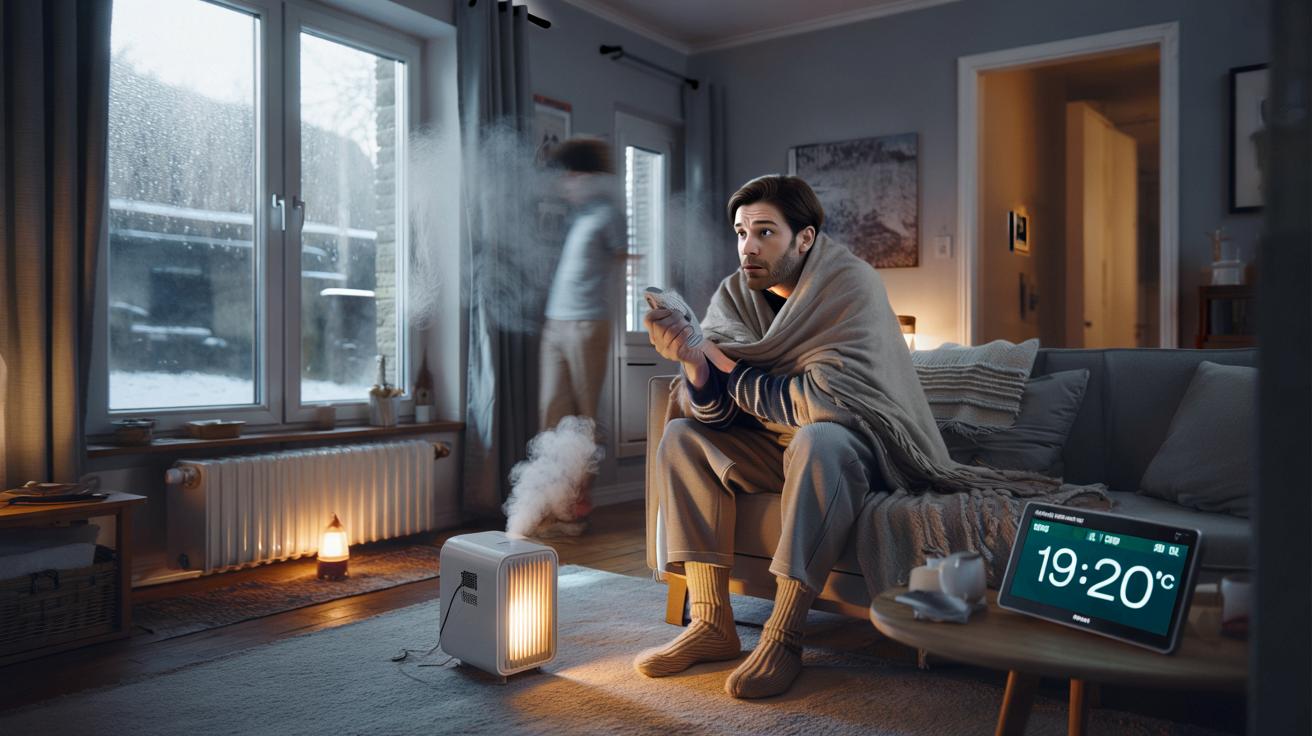
Across Europe and the UK, millions are nudging their heating down to recommended levels, only to discover that the number on the dial doesn’t guarantee cosy evenings. The gap between “air temperature” and “actual comfort” is bigger than many people realise — and it can be closed without simply cranking the boiler.
Why you can feel cold at a “normal” 19–20°C
Thermal comfort is less about the temperature in the air and more about how your body exchanges heat with its surroundings.
The thermostat tells only part of the story
When you see 19 or 20°C on the thermostat, that’s the temperature of the air near that sensor, not of your entire home. Your body reacts to several other factors at the same time, which can easily turn “reasonable” settings into shivers.
- Humidity – Dry air makes your skin and mucous membranes lose moisture, which increases heat loss and gives a sharper sensation of cold. Very humid air can feel clammy and heavy, even at the same temperature.
- Draughts – Small currents of cold air from doors, windows and chimneys strip away the thin layer of warm air around your body and make you feel chilled, especially on your neck, ankles and hands.
- Surface temperature – Cold walls, floors and windows “pull” heat from your body by radiation. You can feel cold sitting next to a chilly wall even while the room air is technically warm enough.
- Your activity level – Sitting at a laptop burns far fewer calories than cooking, cleaning or walking. Less movement means less internal heat, so you feel the cold sooner.
All these elements change how fast your body loses heat. If that heat loss is quicker than the heat your body produces, you will feel cold, regardless of what the thermostat says.
Not everyone feels warm at the same temperature
Two people in the same room can experience very different levels of comfort. Age, health and body composition all affect your internal “thermostat”.
Older adults and young children usually feel chilly at temperatures that others find comfortable. People with thyroid issues, low blood pressure or certain medications can also be more sensitive to cold. Diet plays a role too: eating too little, skipping meals or following strict low-calorie plans leaves your body with less energy to burn as heat.
Comfort is personal. A “standard” 19°C living room may suit your neighbour and still feel like a fridge to you.
What you should do before touching the thermostat
Get humidity in the comfort zone
Healthy, comfortable indoor humidity usually sits around 40–60%. Below that range, air feels dry and cold; above it, rooms feel heavy and damp.
- Use a small hygrometer to monitor humidity in different rooms.
- If air is too dry, consider a humidifier, plants, or simple bowls of water near radiators.
- If air is too damp, open windows briefly to ventilate or use a dehumidifier in problem areas like bathrooms and basements.
A balanced humidity level reduces heat loss from your skin and often makes 19–20°C feel pleasantly warm instead of borderline chilly.
➡️ Warum alte Radios mit Patina Designpreise gewinnen – Schönheit der Geduld
➡️ Das passiert mit Ihrem Körper, wenn Sie jeden Tag eine Handvoll Blaubeeren essen
➡️ Before trees, Earth hosted a giant life form that seemed to come from another world
➡️ Wie Sie mit einem DIY-Regal für Waschmittel die Wäschekammer funktional und stilvoll gestalten
Fight draughts and air leaks
Draughts are one of the most common reasons people feel colder than their thermostat suggests.
- Fit draught excluders or door snakes at the bottom of external doors.
- Check window seals and replace worn or cracked rubber gaskets.
- Use self-adhesive foam tape around loose frames.
- Close unused chimneys properly with a dedicated chimney balloon or draught stopper.
Even a small gap around a door can feel like a constant cold breeze, cutting your comfort long before it shows on your energy bill.
Warm up the cold surfaces around you
Radiant temperature — the warmth or cold of surfaces — strongly shapes how your body feels. If your feet are on a bare, cold floor, the whole room can feel a notch too cool.
- Lay thick rugs or carpets, especially on tiled or concrete floors.
- Use thermal curtains and close them as soon as it gets dark to cut heat loss through windows.
- Move sofas and beds a few centimetres away from external walls to avoid direct contact with cold surfaces.
- In older homes, fit temporary window film to create an extra insulating layer.
Spread the heat, don’t just produce it
Many homes have hot spots and cold corners because heat is not circulating well.
- Use a small fan at low speed to push warm air away from radiators or stoves across the room.
- Bleed radiators to remove trapped air that stops them heating fully.
- Leave internal doors partly open so warm air can move between rooms.
This doesn’t increase the total heat you create, but it makes sure the warmth you pay for reaches you, rather than forming a hot bubble near the radiator.
Dress for the house you actually live in
Indoor fashion often lags behind energy prices. Sitting in a T-shirt at 19°C is a choice, and not always a wise one.
- Wear layers: a breathable base layer, a warm jumper or fleece, and a light gilet if needed.
- Keep your feet covered with thick socks or slippers; a lot of discomfort starts from cold floors.
- Use a blanket or heated throw for long evenings on the sofa instead of heating the whole room more.
Move more, even a little
Low activity equals low heat production. If you work from home or sit still for long periods, short movement breaks can change how the room feels.
- Stand up every 45–60 minutes to stretch or walk around.
- Do a few squats, arm circles or a quick set of stairs.
- Make hot drinks regularly; the warmth from the mug and the movement both help.
A five-minute burst of movement can warm your body as much as a one-degree change on the thermostat — and costs nothing.
Should you actually turn the heating up?
Energy agencies across Europe still recommend around 19–20°C for living areas in winter. That level balances comfort and energy use for most households, assuming the home is reasonably well insulated.
Raising the temperature is not forbidden, but the impact adds up quickly. A common rule of thumb is that each extra degree can add around 7–10% to your heating consumption. With energy prices still volatile, that difference shows up in winter bills.
| Setting | Perceived comfort | Estimated energy use* |
|---|---|---|
| 19°C | Comfortable for many, cooler for sensitive people | Baseline (100%) |
| 20°C | Noticeably warmer for most households | +7–10% |
| 21°C | Cosy for almost everyone, higher cost | +14–20% |
*Indicative figures; actual impact varies by home and heating system.
If you have sealed draughts, improved humidity, warmed surfaces and dressed a bit more warmly but still feel uncomfortable, nudging the dial by one degree is reasonable. The key is making that a conscious decision rather than an automatic reaction every time you feel a chill.
Extra tips and scenarios to think about
Night-time and bedroom strategies
Bedrooms can usually be cooler than living rooms. Many sleep experts suggest around 17–18°C for better sleep quality, with the help of suitable bedding.
- Use a thicker duvet instead of heating the room to living-room levels.
- Close bedroom doors to prevent heat from “leaking” from the rest of the home if you prefer cooler sleep.
- In very cold homes, consider an electric blanket used briefly before getting into bed, then switched off.
Words you may see on your heating controls
Modern thermostats and energy advice often use technical-sounding terms that can be confusing:
- Setpoint: the temperature you ask the thermostat to reach, such as 19°C.
- Thermal inertia: how slowly your home heats up or cools down, depending on its materials and insulation.
- Radiant heat: heat that travels directly from warm surfaces (like radiators and stoves) without warming all the air first.
Understanding these ideas helps you predict how long it will take the house to feel warm and why some changes, like new curtains or rugs, can make a big difference without touching the boiler.
A quick home “comfort audit” for a cold evening
Imagine coming home at 6pm to a living room at 19°C that feels unwelcoming. Before you raise the thermostat, run this five‑minute checklist:
- Check for draughts near windows and doors with the back of your hand.
- Close curtains on all external windows.
- Put on a jumper and warm socks.
- Do a short burst of movement while the kettle boils.
- Check humidity if you own a hygrometer; adjust with ventilation or a humidifier if needed.
In many homes, these steps shift the room from “borderline cold” to “pretty comfortable” without spending extra on energy. Over an entire winter, that difference can save both money and carbon, while keeping your thermostat right where the experts recommend.