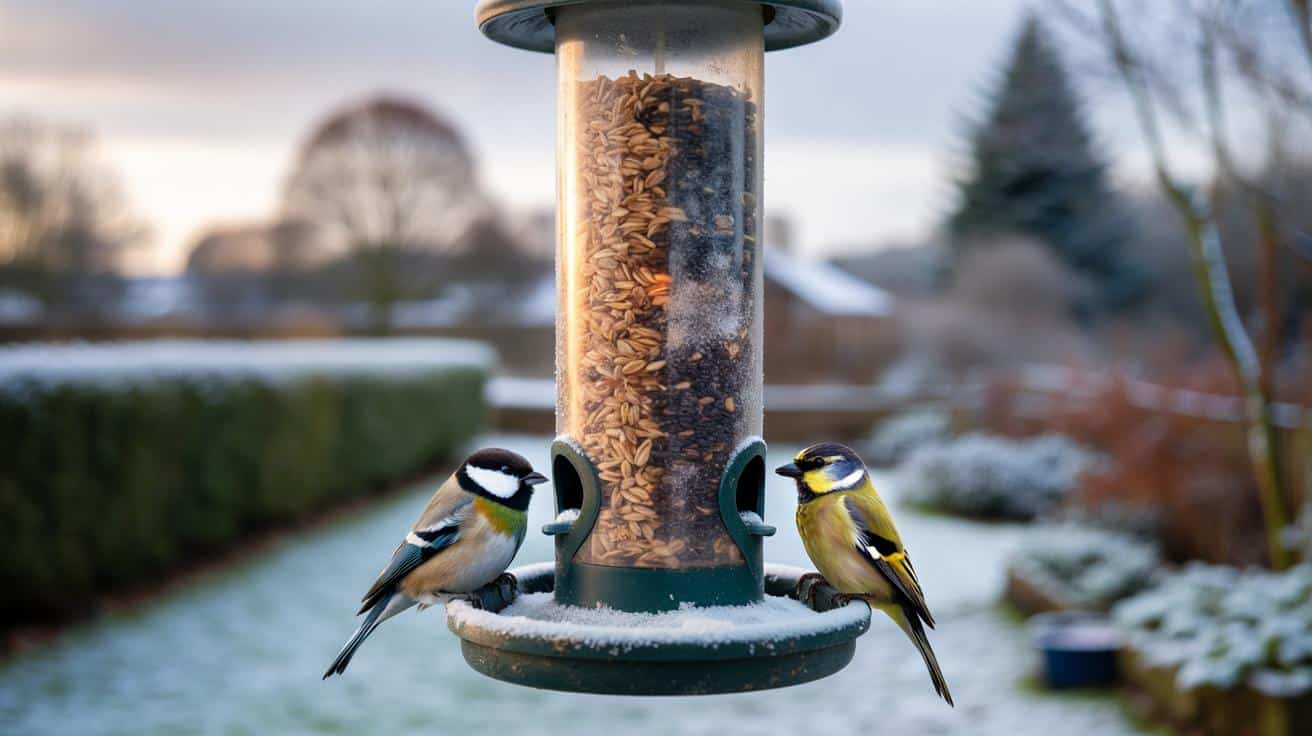
Across the UK and North America, millions of people top up bird feeders once the frost sets in, assuming more food automatically means more help. When the weather turns wet, though, those generous piles of seed can shift from lifeline to health hazard in a matter of days.
Good intentions, hidden danger
Putting out food in winter genuinely helps small birds survive the long, cold nights. Natural food sources shrink, insects vanish, and daylight hours shorten. At the same time, each tiny body must burn huge amounts of energy just to stay warm.
That’s why feeders stay busy around mid to late January, when conditions are often at their harshest and hedgerows are almost bare. Yet this crucial moment is exactly when stored bird seed is most likely to be soaked by rain, coated in condensation or frozen solid.
Dry, fresh seed offers a vital energy boost. Damp, clumped or mouldy seed can drag birds into a spiral of illness and exhaustion.
Many garden bird lovers focus on how much food to provide. Far fewer routinely check whether that food is still safe to eat after days of drizzle, sleet or freeze-thaw cycles.
When moisture turns feeders into health traps
Moisture is the starting point for most problems. Once water seeps into a feeder, seeds begin to break down. They lose oils, vitamins and calories. The mix then clumps together, sticks to surfaces and turns darker in colour.
Very quickly, a microscopic drama unfolds. Warm pockets within the seed mass and trapped moisture create near-perfect conditions for fungal spores and bacteria.
Wet seed can host moulds such as aspergillus and bacteria like salmonella, both of which may be lethal to already stressed birds.
Aspergillus spores, for example, can be inhaled and lead to serious respiratory infections. Salmonella spreads through droppings on contaminated perches and feeders, then back into the beaks of new visitors that arrive to feed.
➡️ Wie Sie mit einem DIY-Korb für Waschtücher die Wäschekammer ordentlich und dekorativ gestalten
➡️ Why you should really avoid buying fish between Christmas and New Year’s Eve
➡️ Your lawn turns into a mud field every winter? Here’s what gardeners do to stop it
➡️ Warum bewusstes Langsamerwerden die Produktivität erhöht
Warning signs on your feeder
Gardeners often notice something is wrong only when the damage is obvious. By then, birds may already have eaten contaminated food.
- Seeds that look slimy, sticky or strangely shiny
- Darkened, blackened or grey patches within the seed mix
- Strong, musty or sour smells around the feeder
- Large clumps or “cakes” of seed that no longer move freely
Any of these signs mean the contents should be emptied into the bin, not scattered on the ground. Birds do not instinctively avoid spoiled food; hunger often wins.
Frozen seed blocks: wasted effort, wasted energy
Moisture brings a second, less obvious risk: freezing. A feeder that gets soaked during a rainy afternoon can turn into a solid lump of ice and seed overnight once temperatures fall below zero.
From a human perspective, the feeder still “looks full”. From a bird’s point of view, it has become a concrete block. Beaks struggle to chip away at the frozen mass, and many birds will repeatedly attempt to reach food that simply will not come loose.
Every unsuccessful peck costs energy. In sub-zero nights, wasted energy can be the difference between survival and hypothermia.
Research on small passerines, such as tits and finches, shows that they carry limited fat reserves. Many only have enough energy for a single winter night. If they burn those reserves fighting with frozen or compacted food, they have little left to endure the cold.
Why “always full” isn’t always kind
There is a cultural habit of keeping feeders overflowing, as a visible sign of care. Yet constantly brim-full feeders are more prone to damp, mould and blockages. Birds benefit more from smaller quantities of fresh food than from a permanent mountain of stale seed.
Building a winter-safe feeding station
The design and placement of your feeder can greatly cut the risk of moisture damage.
Choose equipment that keeps food dry
Closed, vertical “silo” feeders made of metal or tough plastic usually protect seed better than open trays or flat platforms. In silo designs, only a small amount of food is exposed at any time, reducing contact with rain and air.
For very wet climates, many bird experts recommend adding weather guards or domes above feeders. These simple covers can deflect rain and sleet, especially when feeders are mounted on poles in open gardens.
Location matters as much as structure. Feeders under a porch overhang, under dense shrubs or near a sheltered fence line avoid the worst wind-driven rain. Care is needed, though, to keep enough distance from thick cover to reduce ambush points for cats.
| Feeder type | Moisture risk | Best winter use |
|---|---|---|
| Open tray or table | High | Short dry spells, small daily rations |
| Seed silo feeder | Low to medium | General winter feeding, mixed weather |
| Mesh peanut feeder | Medium | Dry but cold conditions, whole peanuts only |
| Fat ball cage | Medium | Very cold periods, limited rain exposure |
Daily habits that protect garden birds
Even without new equipment, small routine changes can greatly improve bird safety at your feeders.
Portion control and timing
- Feed little and often: Add only what birds are likely to eat in a day, then top up next morning.
- Watch the weather: Ahead of heavy rain or snow, cut back the amount you put out to reduce leftovers.
- Shift to safer foods: During very wet spells, use more fat blocks, suet cakes and sunflower hearts in shells, which cope slightly better with moisture than fine mixed seed.
Think of yourself as a caterer running a small winter café: fresh, regular portions beat one huge, stale buffet.
Cleaning and inspection
Hygiene often feels like a chore, yet it sits at the centre of safe bird feeding. Once a week in winter, and more often in mild, damp conditions, feeders should be emptied, scrubbed and dried.
- Use hot water and a mild disinfectant or dedicated wildlife-safe cleaner.
- Rinse thoroughly and allow feeders to dry fully before refilling.
- Brush off any droppings or seed build-up on perches and surrounding surfaces.
Ground feeders or areas under hanging feeders also need checks. A build-up of discarded husks, wet grain and droppings on soil or patio slabs can act as a breeding ground for disease. Raking or sweeping this away reduces risk for ground-feeding species like dunnocks and sparrows.
Beyond seed: building a resilient winter garden
Supplementary feeding is only one part of helping wildlife through winter. Gardens that hold on to natural food sources give birds a more balanced diet and reduce pressure on feeders.
Leaving some ivy, holly and hawthorn berries untrimmed, allowing seed heads to stand on perennials, and keeping a few untidy corners all add backup food. These spaces also provide insects hiding in bark and leaf litter, which many birds need for protein, even in cold months.
Feeders work best as a top-up, not the only food source. A varied garden spreads risk and keeps birds less dependent on a single spot.
Understanding a few key terms
Two words often appear in winter bird care advice: “fermentation” and “pathogens”. Fermentation is the process where microorganisms, mainly yeasts and bacteria, start breaking down food once moisture and mild warmth are present. For human foods like bread or beer, fermentation is controlled. In a feeder, it’s uncontrolled and usually harmful.
Pathogens are any organisms that cause disease, such as certain fungi, bacteria or viruses. Wet, dirty feeders concentrate these agents and can turn a minor hygiene issue into a local outbreak among birds that share the same food source each day.
What happens if you change nothing?
Imagine a typical back garden in late January. A mixed seed feeder hangs from a pole. It has not been cleaned for three weeks. Night-time temperatures bounce between -2°C and 4°C. A couple of rainy days leave water trapped at the base of the feeder.
Within days, the lower layers of seed start to ferment. A dark ring appears. Birds still feed, because the top looks normal. One sick bird sheds bacteria onto the perches. Others pick this up on their beaks, then groom their feathers or eat more seed.
You might only notice fewer visitors or the odd lethargic bird on the lawn. From the birds’ perspective, that neglected feeder has quietly become a point of infection.
Now adjust the picture: the same garden, but the feeder is half-filled each morning, lightly shaken to prevent clumping, checked for odours and emptied if needed. Once a week, it is washed and dried. A fat block hangs nearby for backup calories. Birds move between feeder, shrubs heavy with old seed heads, and a small log pile buzzing with hidden insects. The risk from any single food source drops sharply.
Winter bird feeding can stay a joy rather than a worry, as long as seed condition sits as high in your mind as seed quantity. A quick daily glance, a regular clean and a bit of shelter turn a simple feeder into real support for the wildlife that brightens grey, cold days.