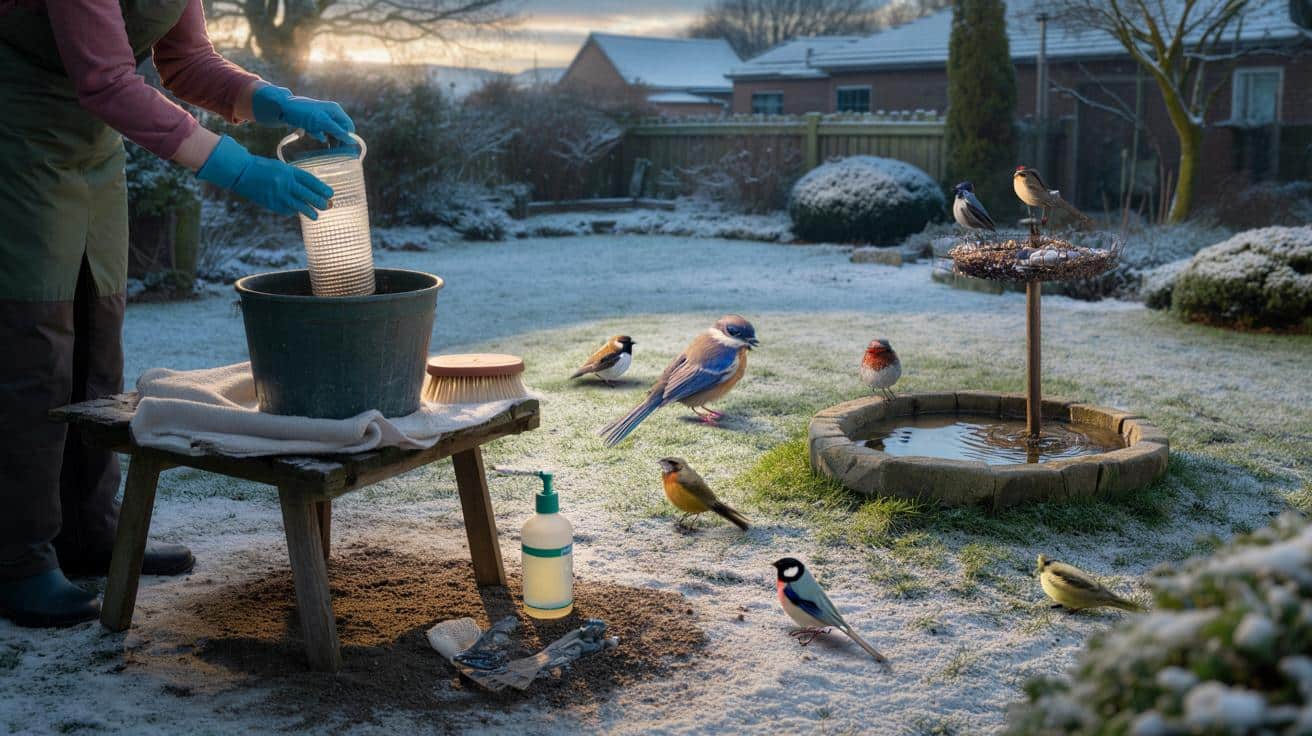
That crowd of blue tits and sparrows feels like a good deed in motion, but winter feeding brings hidden dangers that most bird‑lovers never see from the kitchen window.
When the winter buffet quietly turns dangerous
Putting out seeds and fat balls helps small birds survive short days and freezing nights. Yet those same feeders can become hotspots for infection when flocks gather in tight spaces.
In the wild, birds spread out over hedgerows, fields and woodland edges. They rarely eat shoulder to shoulder. A feeder changes that overnight. Dozens of individuals from different species touch the same perches, peck at the same ports and squabble in the same few square feet.
Winter feeding concentrates birds unnaturally, which lets diseases spread far faster than they would in a scattered landscape.
Every peck, every droplet of saliva left on a seed port, every smear of droppings on a perch increases the chance that one sick bird shares its illness with many healthy ones.
The filthy mix under your feeder
The problem does not stop at the feeder itself. The ground beneath often becomes a sticky carpet of husks, damp seeds and droppings.
Once rain or melting snow hits that layer, it clumps, rots and turns into a perfect growth medium for bacteria and moulds. Ground-feeding birds like dunnocks, blackbirds and robins then walk through and peck at this mess.
Wet, trampled seed mixed with droppings is one of the main routes for garden birds to pick up serious infections.
If leftover seed ferments, it can become toxic. What began as a life-saving snack can slowly poison the very birds you wanted to help.
➡️ Makellose Toiletten und Armaturen: die Anti-Kalk-Lösung ohne Backnatron, die wirklich wirkt
➡️ Weder Gesicht noch Hände: Diese Körperstelle sollten Sie laut Dermatologen zuerst waschen
➡️ Warum du dich ruhiger fühlst, wenn du langsamer isst
The invisible killers: trichomonosis and salmonella
Two diseases worry conservationists most at winter feeding stations: trichomonosis and salmonellosis. Both have caused noticeable declines in some common finches over the last 15–20 years.
Why winter is such a risky season
Cold weather does not wipe out microbes. Many survive quite happily in damp organic debris and on dirty surfaces.
At the same time, birds spend huge amounts of energy just staying warm. That constant demand weakens their defences. A robin that might shrug off a low dose of bacteria in June can succumb to the same exposure in January.
Feeding sites add another twist: they keep birds returning to the exact same contaminated spot, day after day, instead of ranging widely and leaving germs behind.
How to spot a sick bird at your feeder
People often mistake illness for “cute fluffed-up” behaviour. In reality, a healthy bird is jittery, fast and wary.
- Stays still for long periods, even when other birds move
- Looks puffed-up with untidy feathers
- Keeps eyes half-closed or seems sleepy
- Drools or has wet, matted feathers around the beak
- Struggles to swallow or drops food repeatedly
- Lets you come unusually close without flying off
A lethargic, fluffed-up bird on a feeder is not “resting”; it is usually in serious trouble.
If you see several birds looking unwell, that is a strong signal that your feeding station might be amplifying an outbreak.
The real winter favour: cleaning, not just feeding
Food keeps birds alive, but hygiene decides whether your garden becomes a refuge or a disease hub. Many ornithologists now argue that dirty feeders can cause more harm than providing no food at all.
Never top up on top of filth
Adding fresh seed on top of mouldy or clumped leftovers simply buries the problem out of sight. The contamination is still there, ready to spread.
Treat a bird feeder like a dinner plate: if it looks soiled, it needs cleaning before you refill it.
Before every refill, tap out old seed. Look for slimy residue, dark patches or a sour smell. If anything looks suspicious, empty and clean the whole unit instead of “making do”. Throw spoiled seed in the bin or a closed compost heap, away from where birds feed.
Move your feeding station around the garden
Leaving one feeder in the same spot all winter lets waste build up underneath. Shifting it by a few metres every couple of weeks helps the soil recover.
Worms, insects and soil microbes break down husks and droppings naturally if they are not overwhelmed. Moving feeders also reduces the chance that local cats or sparrowhawks learn exact flight paths and attack points.
A simple weekly disinfection routine
A basic cleaning schedule keeps risk far lower without becoming a full-time job. During peak winter use, once a week is a good target. In milder months, every two to four weeks may be enough, depending on traffic.
| Step | What to do |
|---|---|
| 1. Empty | Remove all remaining seed or suet and discard if damp or dirty. |
| 2. Scrub | Use hot, soapy water and a stiff brush to clean trays, ports and perches. |
| 3. Disinfect | Rinse, then soak or wipe with a weak household bleach solution (about 1 part bleach to 9–19 parts water). |
| 4. Rinse again | Rinse thoroughly with clean water until no odour remains. |
| 5. Dry | Let the feeder dry completely indoors or in sun before refilling. |
Plastic and metal feeders tolerate disinfection well. Wooden platforms need a little extra time to dry through, as damp wood encourages mould growth deep in the grain.
The job is only finished when the feeder is bone dry; refilling too early recreates perfect conditions for fungi.
Many keen bird‑watchers keep two feeders and rotate them: one outside in use, one inside drying after cleaning.
Do not forget the water source
In winter, water can matter as much as calories. Dry seed diets are hard to digest without regular drinking. Birds also need to bathe to keep feathers clean and insulating.
Why dirty birdbaths are a problem
An unwashed birdbath quickly becomes a shared drinking cup. One infected bird can contaminate the water, and every visitor after that takes a sip.
Cloudy, green-tinged or debris-filled water is a warning sign that bacteria and algae are thriving.
In cold weather the surface may look fresher, simply because algae grow more slowly, but pathogens can still be present in high numbers.
Daily water changes and winter tricks
Replacing the water once a day flushes away most contamination and stops ice from taking over. A quick scrub of the bowl with a brush every few days keeps biofilm from building up.
On freezing mornings, pour in lukewarm (not hot) water to delay icing. Avoid salt, glycerine, antifreeze or other additives often suggested in online forums. Many of these are toxic to wildlife, even in small amounts.
Night shelters: cleaning nest boxes for winter guests
Nest boxes do not retire when the breeding season ends. Tits, wrens and other small birds often use them as winter dormitories, sometimes piling in several at a time to share heat.
Clearing out last year’s nests and parasites
Old nests can harbour fleas, lice and mites waiting for a new host. Clearing them out gives winter roosters a much better deal.
On a dry, mild day when the box is clearly empty, open it, remove the old nesting material and scrub the inside with a dry or slightly damp brush. Most garden situations do not require chemicals, which can cling to the wood and irritate birds later.
Keeping winter roosts dry and comfortable
A clean box still needs to stay dry. A damp floor chills tiny bodies already battling low temperatures, and moisture favours fungal growth.
A handful of clean, dry wood shavings in the bottom of a roost box helps absorb moisture and adds a bit of insulation.
Check that drainage holes are clear and the roof does not leak. Birds often cram six or more individuals into a single box on harsh nights; cramped, dirty conditions at that density significantly raise disease risk, so cleanliness matters here almost as much as at the feeder.
Extra tips and realistic scenarios for garden bird safety
People sometimes worry that stopping feeding during an outbreak will “starve” their birds. In practice, most healthy individuals still have access to hedgerows, berries and invertebrates, even in cold spells.
If you notice several sick birds, one practical approach is to remove all feeders and baths for two weeks. This breaks the cycle by forcing birds to disperse. During that time, you can deep-clean equipment, rake up waste beneath feeding areas and let the ground recover.
Some terms often used by bird groups are worth unpacking. A “feeding station” usually means a cluster of feeders, trays and a nearby birdbath in one area. A “biosecurity break” is a deliberate pause in activity, such as removing feeders, to cut disease transmission. Adding these ideas to your winter routine brings your backyard closer to professional standards used at nature reserves.
For families, these hygiene steps can become a regular activity rather than a chore. Children can help refill clean feeders, tick off species they see, or measure how quickly water freezes in the birdbath. That way, the garden becomes not just a rescue point for wildlife, but a living classroom on how small changes in human behaviour shape animal health.