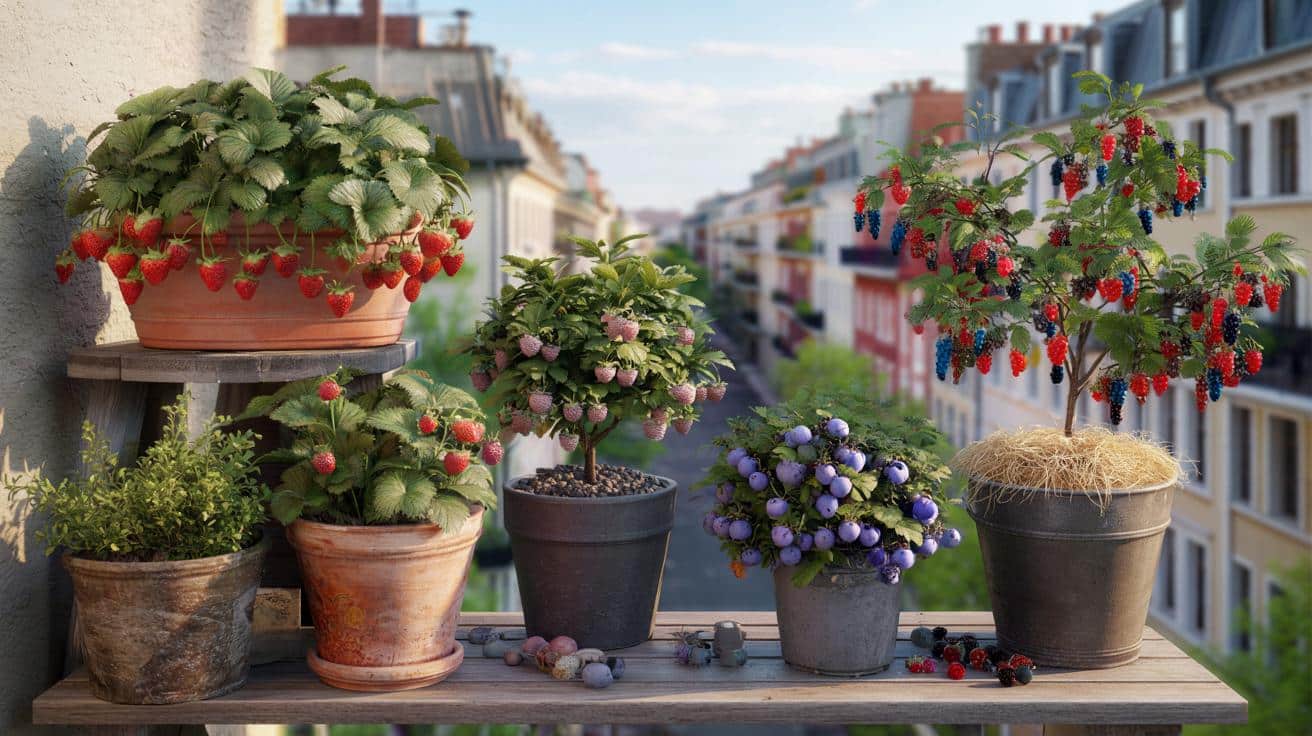
Across European cities, more renters and flat-owners are quietly turning balconies into compact berry patches. With the right varieties and a bit of planning, you can pick fruit still warm from the sun without ever owning a garden.
Why berries actually enjoy life in pots
Most soft fruit shrubs have fairly shallow roots. That makes them surprisingly comfortable in containers, provided the soil drains well and doesn’t dry to dust between waterings.
Berries in pots give you control: over soil mix, water, light and even distance from traffic pollution.
Unlike in open ground, you can tailor each pot to the plant. Strawberries get a rich, fertile mix. Blueberries get acidic, ericaceous compost. Currants enjoy something cooler and more moisture-retentive.
Containers can also be moved. A blueberry struggling in fierce afternoon sun can be shifted to a gentler spot. A pot of strawberries can be pushed closer to the wall during a late frost. On a balcony, wheels and lightweight pots become your best tools.
The main challenge is water management. In summer, the compost in a black plastic pot can heat up fast and dry out by midday. Let that happen too often and plants sulk, fruit shrivels and yields drop.
The rule with potted berries: plenty of water, excellent drainage, and never leave roots in a soggy saucer overnight.
Raised slightly on pot feet, with a layer of gravel or clay pebbles at the base, containers let excess water escape and keep roots aired. That alone reduces disease and keeps plants productive for years.
Strawberries: the balcony classic that fruits in year one
Choosing pots and varieties
Strawberries are usually the first experiment for small-space gardeners, and for good reason: they fruit quickly and don’t demand deep soil.
➡️ Makellose Toiletten und Armaturen: die Anti-Kalk-Lösung ohne Backnatron, die wirklich wirkt
➡️ Seit ich Salz in meiner Spülmaschine anders verwende glänzt alles wie neu
➡️ Warum Haustiere bestimmte Räume bevorzugen, obwohl die Temperatur gleich ist
➡️ The sentence to put a condescending person back in their place
➡️ Die Schicksale von vier Sternzeichen stehen jetzt vor einer entscheidenden Wende
➡️ Feeding birds this winter? Check your seed condition fast – their lives depend on it
- Depth: 20–25 cm (about 8–10 inches)
- Volume: around 10 litres per plant
- Position: full sun or at least six hours of light
General-purpose compost mixed 50/50 with mature compost works well. Add 3–5 cm of clay pebbles or gravel at the bottom to stop roots sitting in water.
So-called “everbearing” or remontant varieties, such as Mara des Bois, spread the harvest over months rather than a single glut. Trailing types suit window boxes and hanging baskets, where fruits can dangle over the edge, away from slugs and splashes of soil.
Routine that keeps plants productive
In hot spells, watering two to four times a week is often necessary on a balcony, especially if there’s wind. The aim is moist, springy compost, not mud.
Strawberries send out runners (stolons) that root and form baby plants. On a small balcony, let just a few of these develop and cut off the rest. This channels energy back into fruiting instead of endless foliage.
After about three years, yields usually drop. Replacing older plants with new ones raised from runners keeps the miniature patch young and generous.
Dwarf raspberries: hedgerow flavour in a single tub
Compact canes that suit renters
Standard raspberries can grow into a thicket and need strong supports, which is awkward on a fourth-floor balcony. Dwarf varieties, bred for containers, stay manageable while still producing good-sized berries.
Look for named cultivars such as Ruby Beauty or other compact, often thornless types. They generally do well in:
- Depth: 30–40 cm
- Volume: at least 15 litres per plant
- Mix: light compost with some acidic material and added composted manure
Given sun, regular watering and a steady supply of nutrients, a mature dwarf raspberry can eventually yield up to around 1.5 kg of fruit in a season.
Pruning without overthinking it
Pruning raspberries intimidates many beginners, yet container plants make it simpler because numbers of canes are limited.
On a balcony, think of raspberry pruning as a yearly reset: remove what fruited and leave new, healthy canes.
For summer-fruiting (non-remontant) types, cut out canes that have already fruited at the base in late winter, leaving young, unfruited stems. For autumn-fruiting (remontant) sorts, you can simply cut all canes down to a few centimetres above the soil each winter and let them regrow.
Blueberries: the acid-loving star of the patio
Getting the soil right from day one
Blueberries are often described as tricky, but most problems come from the wrong compost. They need acidic conditions, similar to azaleas and camellias.
- Depth: 30–40 cm
- Volume: 20–30 litres
- Compost: ericaceous (acidic) mix, well-drained
Planting at least two compatible blueberry bushes, each in its own pot, improves pollination and fruit size. Dwarf cultivars such as Top Hat or Sunshine Blue stay compact enough for balconies and terraces.
Blueberries appreciate bright light but can sulk in harsh, reflective heat, such as a south-facing wall with no shade. A position with morning sun and light afternoon shade often suits them well.
Water and feeding for chunky berries
Hard tap water high in lime gradually raises pH, making plants yellow and weak. Where water is very hard, many growers use collected rainwater as much as possible and top up with ericaceous liquid feed during the growing season.
If leaves start to yellow between the veins, that’s often a sign your blueberry wants more acidity, not more fertiliser.
A light annual mulch with pine needles, shredded bark or ericaceous compost around the base helps maintain acidity and moisture while keeping roots cool.
Currants and blackcurrants: shade-tolerant clusters for cool corners
Making use of that awkward side balcony
Not every outdoor space is a sun trap. North-east facing balconies, courtyards or shady roof terraces can still host fruit, especially redcurrants and blackcurrants.
| Berry | Light preference | Ideal pot volume |
|---|---|---|
| Redcurrant | Partial shade to sun | 20–30 litres |
| Blackcurrant | Partial shade | 20–30 litres |
These shrubs appreciate a cool root run. A mixture of multi-purpose compost and well-rotted compost or manure, with good drainage, works for both. A stable container 30–50 cm deep gives their root systems enough space.
Mulching the surface with bark, compost or even a layer of straw slows evaporation and keeps the soil slightly damp, which currants enjoy.
Light pruning, heavy harvests
Currant bushes are naturally quite tidy in pots, growing into rounded shapes. A light prune in late winter helps keep the centre open and lets air circulate, reducing the risk of fungal diseases.
Redcurrants carry fruit on older wood, so only remove a portion of the oldest stems at the base each year to encourage new shoots. Blackcurrants do best when a third of the oldest, darkest stems are cut out annually, pushing the plant to produce vigorous new growth that will carry next season’s berries.
Planning your balcony mini-orchard
A small collection of containers can provide a surprising amount of fruit from late spring to early autumn. Even a modest balcony might host:
- One window box of everbearing strawberries
- One large tub with a dwarf raspberry
- Two separate pots with compact blueberries
- One container with a redcurrant or blackcurrant
Arranging taller shrubs at the back and strawberries towards the front lets every plant catch the light. Keeping watering cans and a small bag of fertiliser close at hand removes friction: if it’s easy, you’re far more likely to keep to a routine.
A handful of well-managed pots can satisfy breakfast bowls, weekend pancakes and the occasional jar of jam.
Common pitfalls and how to avoid them
Three issues crop up repeatedly on balconies: inconsistent watering, undersized pots and neglecting feeding. A deep, good-quality container often weighs more and costs more up front, yet it stabilises temperature and moisture, and typically doubles the life and yield of the plant.
Slow-release fertiliser granules or regular liquid feeds keep container soil from becoming exhausted. Because pots are closed systems, nutrients wash out with every watering, so berries rely entirely on the gardener to replace them.
Extra tips: terms, risks and small experiments
Seed catalogues use terms like “remontant” or “everbearing” for strawberries and raspberries. This simply means they fruit in several waves across the season, instead of producing all at once. For busy households, that staggered crop can fit better around daily life.
On high balconies, strong winds can dry pots rapidly and snap soft shoots. Securing containers to railings, adding discreet windbreaks, and choosing heavier ceramic or wooden planters for taller shrubs reduces that risk.
For those unsure where to start, one useful experiment is to plant two identical strawberries: one in a shallow, bargain pot with poor drainage, and one in a deeper, well-prepared container. Watching the difference over a single summer teaches more about container gardening than any manual.
Beyond fresh eating, balcony berries open the door to small kitchen projects: freezing mixed berries for winter smoothies, making quick compotes, or infusing vinegar or gin with a handful of blackcurrants. These side benefits often turn a casual experiment with one pot of strawberries into a long-term habit of growing fruit at arm’s reach.