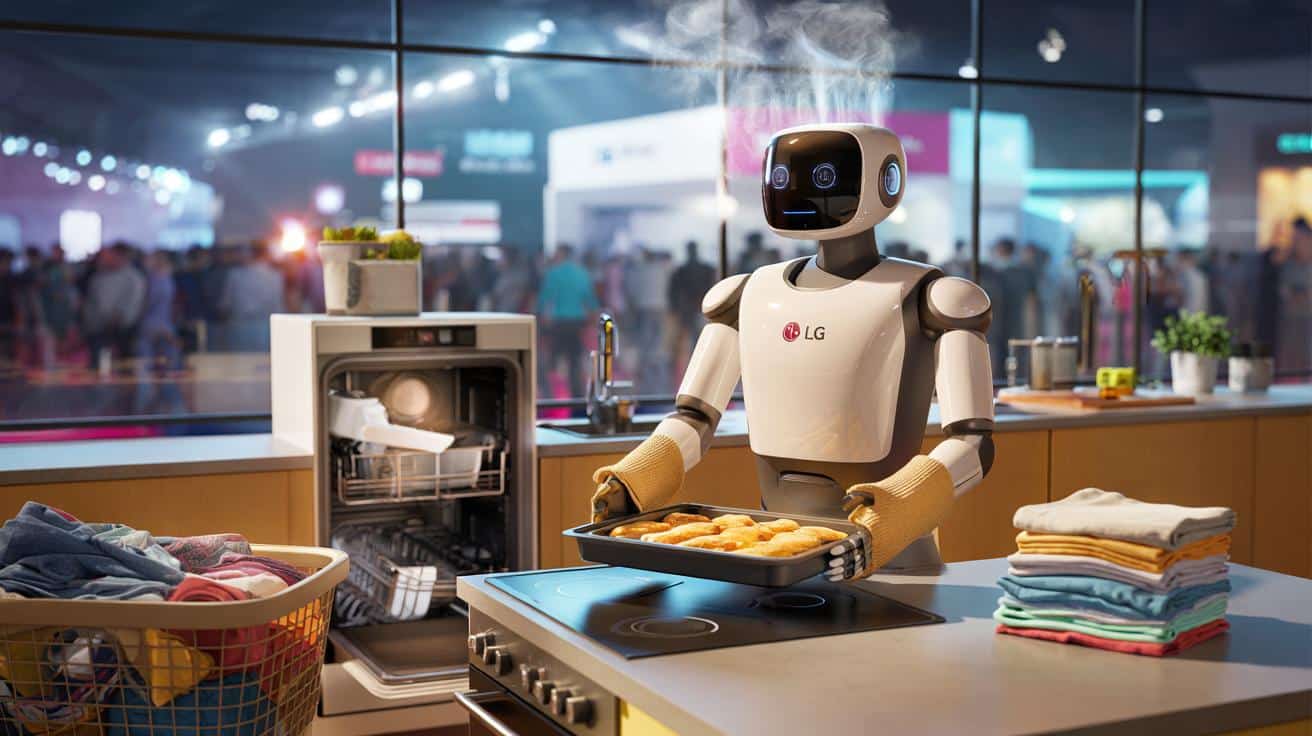
While TVs get bigger and cars more electric, one domestic robot in Las Vegas is attacking the dullest part of everyday life: the endless loop of laundry, dishes and cooking cleanup.
A household revolution on the CES show floor
CES 2026 in Las Vegas has a clear theme: artificial intelligence is no longer just inside apps and smartphones. It is now physically moving through the home, gripping objects, reading rooms and taking over chores that used to be non‑negotiable parts of family life.
Big electronics brands are betting that the next growth market is not another screen, but a home that can largely look after itself. Fridges that track food and suggest recipes, washing machines that pick the right programme, and smart thermostats have paved the way. The next step is a machine that actually does the work between those devices.
At CES 2026, the star attraction is a domestic robot that promises to fold laundry, unload the dishwasher and handle hot dishes straight from the oven.
The robot that tackles real chores, not just vacuuming
From LG concept to full‑on home helper
LG is drawing large crowds with its prototype robot, shown under the name LG ClOiD. Unlike a puck‑shaped vacuum, this is a mobile assistant with articulated arms, multiple cameras and depth sensors. It moves around the kitchen or utility room, identifies objects, grasps them and places them where they belong.
The most headline‑grabbing demo: a full laundry routine. Engineers load clean clothes haphazardly into a laundry basket. The robot approaches, uses vision algorithms to identify individual garments, picks them up one by one, flattens them and performs a basic fold. The result is not department‑store perfect, but recognisably folded T‑shirts and towels stacked into a neat pile.
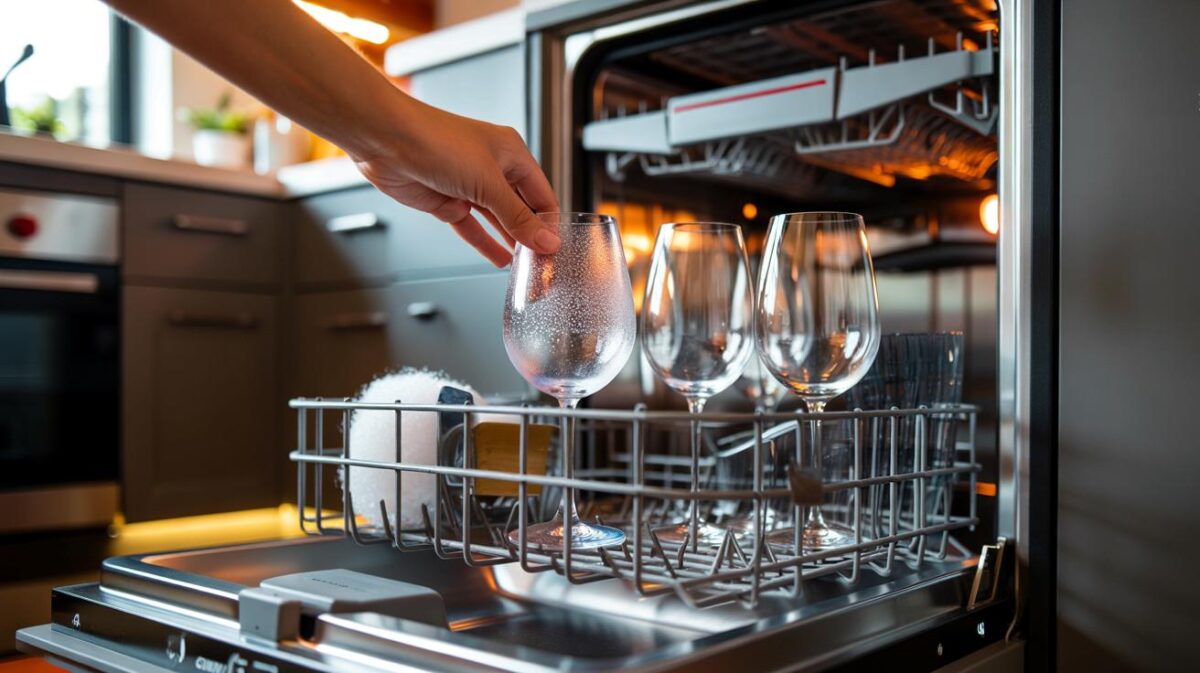
Next, the robot faces a dishwasher door, already open. Using its cameras, it maps the rack, recognises plates, glasses and cutlery, and removes them with a two‑finger gripper. It then walks over to nearby cupboards and drawers, which it learned during an initial “tour” of the home, and puts everything away in roughly the right spot.
The robot relies on AI models trained to recognise thousands of household objects, combined with local learning that adapts to each home’s layout.
Handling heat: dishes straight from the oven
The boldest part of the demonstration involves an oven set to a realistic cooking temperature. Wearing heat‑resistant pads on its grippers and guided by thermal sensors, the robot opens the door, grabs the hot tray and slides it onto the counter.
➡️ Warum Sie Ihre Steckdosenleiste immer ausschalten sollten, bevor Sie übers Wochenende verreisen
➡️ Diese einfache Technik verhindert, dass digitale Unordnung zurückkehrt
➡️ Der Trick mit der Nivea Creme: Augenringe reduzieren und ab 50 jünger wirken
➡️ Abschied von der Haarfarbe : Der neue Trend, der graues Haar kaschiert und jünger wirken lässt
To reduce risk, engineers limit the speed of every movement around hot surfaces. The robot keeps a generous safety distance from people, and its path‑planning software constantly checks for pets or children walking past. If it detects anything in the way, it freezes in place.
These might look like small steps, but they address three of the most time‑consuming repetitive tasks in busy households: laundry, dishes and cooking logistics.
How it actually works inside
Behind the polished demo, the robot combines several layers of AI and robotics hardware:
- 3D cameras and depth sensors to map rooms and cabinets in real time
- Object recognition models that label plates, cups, towels and appliances
- Gripping algorithms that decide how to hold each item without breaking it
- Navigation software that avoids furniture, wires and stairs
- Energy‑optimising routines that coordinate with other smart appliances
LG’s system connects to existing smart fridges, washing machines and ovens through standard protocols. If the washing machine signals that a cycle has finished, the robot can head over, unload it and eventually transfer items to a dryer or drying rack. If the oven’s timer ends, the robot receives an alert and prepares to handle the hot tray.
The goal is a home where appliances do not work in isolation but cooperate to shift chores along a continuous chain without constant human prompting.
Robot assistants are spreading beyond one brand
SwitchBot and the rise of multi‑task household bots
LG is not alone. SwitchBot, better known for small gadgets that press buttons or open curtains, is showing Onero H1, a bulkier mobile robot focused on manipulation rather than just cleaning floors.
Onero H1 uses an advanced vision system to pick up scattered items, carry them to designated zones and interact with appliances such as washing machines. During a demo, it sorted laundry into light and dark piles before loading a drum, closed the door and triggered the appropriate programme.
Both companies emphasise adaptation. The robots build a 3D map of each home and remember where owners keep cutlery, mugs or bed linen. Over time, they adjust routines to match habits: what time laundry usually runs, when the dishwasher is full, which rooms to avoid at night.
Beyond the hero robot: a new cleaning ecosystem
The CES 2026 show floor also highlights smaller, specialised devices that fill gaps traditional robot vacuums left open:
- Smarter robot vacuums that can spot tangled cables, toys and pet bowls and route around them instead of getting stuck
- Surface‑cleaning robots for floors, windows and even swimming pools, using 3D maps to cover every corner efficiently
- AI‑assisted organisation hubs that track tagged items, such as keys or remote controls, and tell you where they last saw them
- Coordinated washers, dryers and vacuums that align their runs to avoid overloading the electricity supply at peak times
Overall, these systems aim to cut down the mental load that comes with managing a home. The focus is not just a cleaner floor, but fewer decisions, fewer reminders and fewer late‑night “I forgot to run the dishwasher” moments.
Who will actually buy this, and when?
Early versions of these multi‑purpose robots will likely cost as much as a small car and target high‑end or tech‑enthusiast homes first. Industry analysts at the show speak of a five‑ to ten‑year path before prices drop to a level comparable with today’s premium household appliances.
| Aspect | Early generations | Expected later generations |
|---|---|---|
| Price | High, likely several thousand pounds/dollars | Closer to top‑end washing machines or fridges |
| Tasks | Limited set, scripted demos | Wider range, self‑taught routines |
| Reliability | Needs frequent supervision | Capable of unsupervised work for hours |
For now, manufacturers insist these robots are assistants, not replacements. They still need human help for tricky fabrics, fragile glassware or cluttered rooms. Families will also need to adjust: leaving clear paths on the floor, labelling storage areas and allowing the robot time to “learn” the layout.
Privacy, safety and what could go wrong
Any machine that roams the house with cameras raises obvious questions. Companies at CES claim that most processing runs locally on the robot, reducing the need to send video to external servers. Still, users will have to check what data gets uploaded for software updates or performance improvements.
Safety is another concern. Robots strong enough to lift heavy dishes or laundry baskets need strict force limits and reliable obstacle detection. Demonstrations show emergency stop buttons, voice commands to halt movement and automatic shutdown routines if sensors fail.
A realistic scenario: a robot unloading the dishwasher pauses when a child reaches for a plate, waits, then continues once the space is clear. That level of contextual awareness is still under active development and will be a key factor in real‑world adoption.
What this could mean for everyday life
Imagine a typical weekday in a few years. You leave for work, telling the robot to handle laundry and dishes. It coordinates with your washing machine and dryer, folds clothes into separate piles for each family member and sends a notification when everything is stacked on the bed. Later, as the oven finishes a lasagne, the robot transfers the hot dish to a trivet and starts the dishwasher with the used trays.
For people with mobility issues, chronic fatigue or limited time between jobs and childcare, that kind of support could reshape daily routines. The risk, of course, is over‑reliance: when the robot fails, basic skills like cooking, washing and organising still matter.
In tech circles, a term often used for this new wave of devices is “embodied AI” – artificial intelligence not stuck on a screen, but acting through a body in physical space. These machines blend software that understands patterns with hardware that can move, grasp and gently nudge plates into a cupboard without smashing them.
Whether they become as common as microwaves or stay as luxury gadgets will depend on how well they handle the messy, unpredictable reality of real homes. CES 2026 suggests that the race has clearly started, and laundry, dishwashers and oven trays are on the front line.