The rabbit stares at you from behind the bars, nose twitching, eyes bright, teeth working nervously on the same old pellet mix. The bag promised “complete food”, bright colors and happy bunnies sketched on the front. But the bowl empties faster than you can refill the hay rack, and there’s this tiny sting of doubt in your stomach every time you pour those pellets.
One evening, you’re cutting fresh herbs for dinner. A sprig of parsley falls on the floor. Your rabbit rushes over, devours it like it’s the best thing in the world, then goes straight to the hay, chewing in slow, content rhythm.
In that small moment, something clicks.
Why a rabbit’s body is built for hay – not for pellets
If you watch a healthy rabbit for a whole day, you’ll notice one thing: they are almost always chewing. Not on pellets, not on treats, but on long, rough fiber. Their teeth never stop growing, their gut never really stops moving. Hay is not just food; for rabbits it’s a whole system that keeps teeth, digestion, and even mood in balance.
Pellets, on the other hand, are like fast food. Smell good, easy to eat, quick to swallow. Too easy, actually.
A German vet once told me about a young rabbit called Flocke. The family loved her dearly, fed her “premium pellets”, colorful mix, lots of dried corn, barely any hay because “she didn’t like it”. At first, Flocke seemed fine. Then came the soft poop, the bloating, the strange way she chewed. One day she stopped eating hay at all.
At the clinic, the X-ray showed dental problems and gas in the intestines. The vet didn’t talk about exotic diseases. She just asked one simple question: “What does she eat every day?” The answer was written all over the pellet bag.
A rabbit’s digestive tract is designed for one main fuel: coarse, fibrous plant material. That means **unlimited good hay**, plus leafy greens and only a tiny amount of pellets, if any. Long fibers keep the gut moving, avoid dangerous stasis, and grind teeth down in a natural way. Pellets are so compact that a rabbit can swallow a lot of calories and nutrients quickly, without the long chewing work their body expects.
Plain truth: a bowl full of pellets is easier for us than refilling a hay rack three times a day. Yet that convenience slowly pushes their body into imbalance.
How to build the perfect daily menu: much hay, few pellets and 4 safe plants
The simplest routine is often the best: start and end the day with fresh hay. A big, always-full hay rack, plus a second “snack pile” on the floor or next to the litter box. Change it daily so it smells inviting, not dusty. If the hay looks dull or smells like nothing, your rabbit will turn to anything else.
➡️ Der Hausmittel-Trick, um Ihre Fenster mit nur 2 Zutaten makellos zu machen
➡️ Kündigung zurücknehmen weil der chef nett ist
➡️ Weshalb Menschen, die ihre Gedanken laut aussprechen, komplexe Probleme schneller lösen
➡️ Gemüse im vorgarten warum eine familie räumen soll und der ort gespalten ist
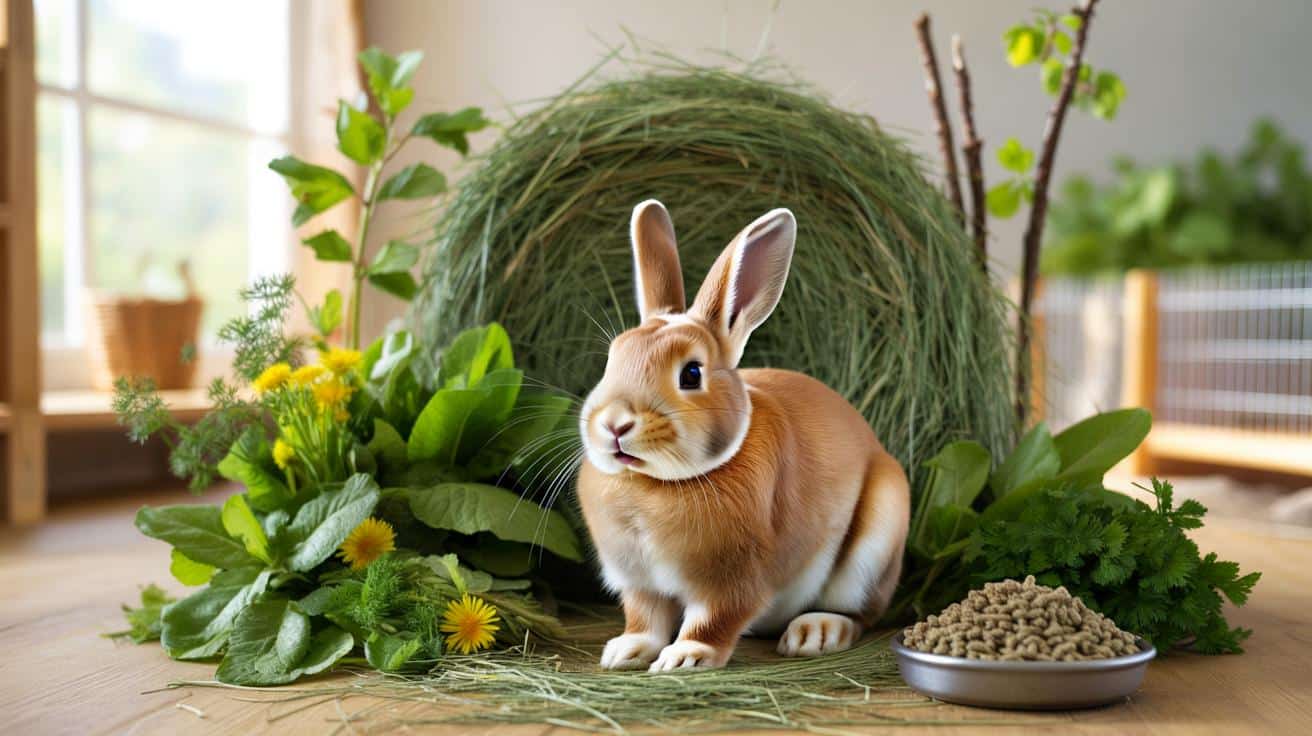
Then comes the green part. Think of a mixed salad bowl: different textures, leaves, and stems. Parsley, coriander, romaine, dandelion from safe areas, a few twigs. Pellets, if you use them at all, go on top like croutons – not the other way round.
Many people struggle with the transition. The rabbit is “addicted” to pellets, ignores hay, begs at the bars at the usual feeding time. We’ve all been there, that moment when you cave in and pour “just a little more” because the rabbit looks so offended.
A gentler method is to cut pellet portions slowly, week by week. First halve the amount. Then mix pellets into a big portion of fresh greens, so the rabbit has to search and chew more. Offer a handful of especially fragrant hay (timothy or meadow hay) at their favorite spot. Within a few weeks, most rabbits rediscover hay once their belly isn’t always full of concentrated feed. *The point is not punishment, but guiding their instinct back to real food.*
At some stage, every owner types the same question into Google: “Which plants are safe for rabbits?” Among the many good options, these four stand out as ungiftig, easy to find, and absolutely loved:
“Feed your rabbit with what a wild rabbit would recognize: leaves, stems and herbs, not colored cereal bits from a bag.”
- Dandelion (Löwenzahn) – Fresh leaves and flowers from unsprayed areas. Rich in calcium and bitter substances that support digestion.
- Plantain (Spitzwegerich / Breitwegerich) – Roadside classic, as long as it’s clean. Great for the respiratory system and gut.
- Fresh parsley – Fragrant, accepted by most rabbits, perfect as part of a daily green mix, not as a mono-food.
- Hazel or apple twigs with leaves – Ideal to gnaw, support teeth and mental activity, completely safe when untreated.
Rethinking “treats” and trusting your rabbit’s real nature
Once the hay-and-herb routine settles in, something changes in the way you look at “treats”. The sugary drops in the pet shop suddenly look more like candy for kids than love for rabbits. A real treat becomes a crunchy twig, a leaf of fresh basil, a small piece of fennel bulb. The rabbit doesn’t care about the brand name, only about smell, texture, freshness.
Let’s be honest: nobody really weighs every leaf and checks every nutrient ratio every single day. What you can do, though, is keep one simple picture in mind – your rabbit as a small, smart grass-eater, not a tiny dog that needs a bowl.
| Key point | Detail | Value for the reader |
|---|---|---|
| Hay as main food | Unlimited, fresh, fragrant hay available 24/7 | Prevents digestive problems and dental issues long term |
| Pellets in small amounts | Max. 1–2 tablespoons per kg body weight, or none for healthy adults | Reduces obesity risk and encourages natural chewing behavior |
| Safe plants & twigs | Dandelion, plantain, parsley, hazel/apple twigs | Offers variety, mental stimulation and species-appropriate nutrition |
FAQ:
- Question 1How much hay should my rabbit eat per day?Ideally, your rabbit should eat a pile of hay about the size of its own body every 24 hours. The hay rack should never be empty, so your rabbit can nibble day and night.
- Question 2Can I completely stop feeding pellets?Yes, many healthy adult rabbits live perfectly on hay, fresh greens and safe plants. If your rabbit is used to pellets, reduce them slowly and talk to a rabbit-savvy vet if there are health issues.
- Question 3Are all garden plants safe for rabbits?No. Some ornamental plants are toxic, such as oleander, yew or many houseplants. Stick to known safe species like dandelion, plantain, herbs and fruit tree branches from unsprayed trees.
- Question 4My rabbit doesn’t eat hay – what can I do?Try different hay types (timothy, meadow, mountain hay), offer it in several places, mix a few dried herbs in, and cut pellets. A vet check is wise to rule out dental pain.
- Question 5Can I give carrots and fruit every day?Better not. Carrots and fruit are more like sweets, high in sugar. Offer them rarely, in very small pieces, and focus daily on hay and leafy greens.