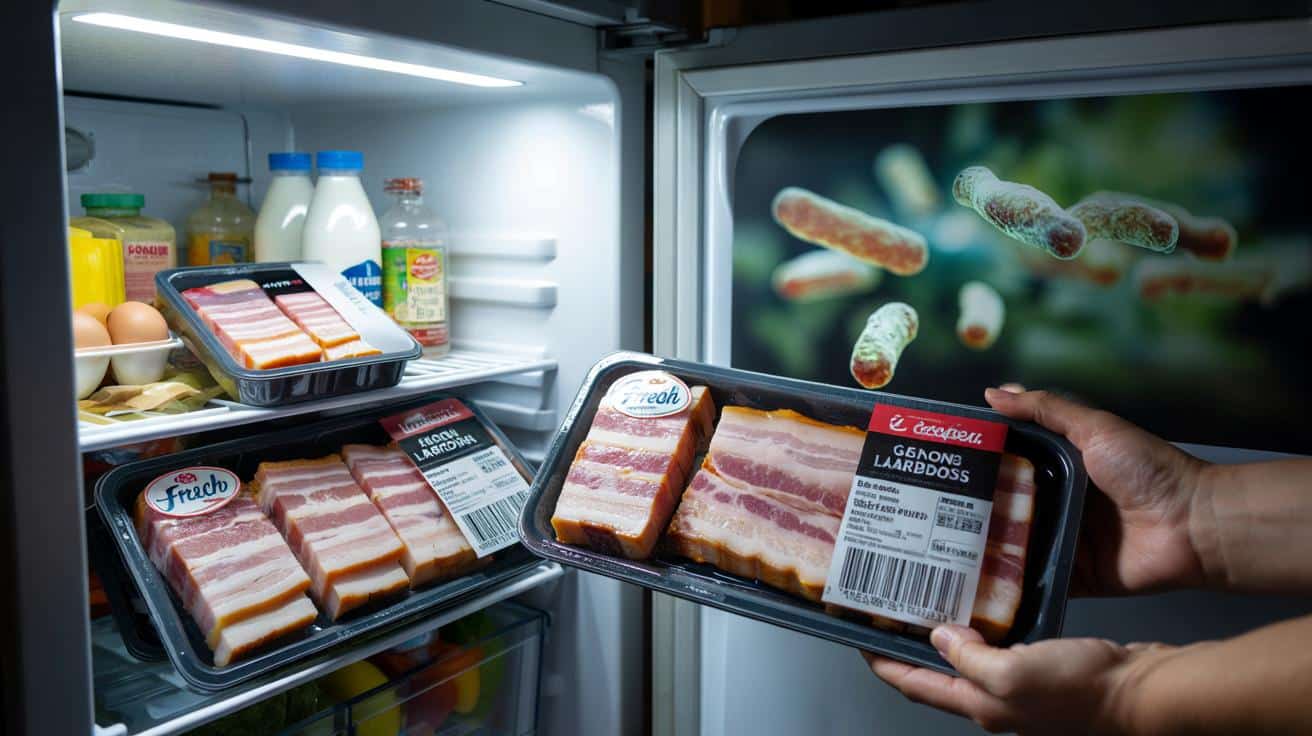
Shoppers in France who recently bought smoked bacon pieces from several popular fresh food chains are being urged to check their fridges. A nationwide recall was launched after a batch of diced lardons, sold under the Fresh brand, was linked to a potential Salmonella contamination.
Which bacon packs are affected
The alert concerns a specific product: a 150 g pack of smoked “paysan” lardons, sold in transparent plastic trays in the chilled self-service aisles.
The product is listed as “barquette lardon paysan 8x8xHP 150g s/g” in the meat category and was distributed across mainland France through Fresh, Grand Frais and Mon Marché outlets.
Only one batch is targeted: lot number 770948, with a “use by” date of 9 February 2026.
These trays were placed on shelves between 14 and 19 January 2026, depending on the chain, giving a relatively narrow purchase window for customers to check against.
For those who keep their receipts or scan their loyalty cards, the recall period can help pinpoint whether the product was bought during that time. The packs carry the GTIN barcode 3240650103080 and a health mark number FR 70.093.001 on the label.
Where the recalled lardons were sold
Unlike small local recalls, this alert affects multiple retailers and a broad area:
- Fresh stores, with the relevant lardons reportedly put on sale on 18 and 19 January
- Grand Frais outlets, which share some of the same fresh meat suppliers
- Mon Marché sales channels, including physical points of sale and its online offer
French authorities describe the distribution as nationwide. That means any shopper in France who picked up Fresh-branded smoked bacon pieces in mid-January should take a minute to inspect their packs.
Why Salmonella is a concern in bacon
The recall was triggered after the detection of Salmonella spp., a group of bacteria responsible for salmonellosis, one of the most common foodborne illnesses in Europe.
➡️ Die kälte lässt sie hungern der schnee sperrt sie ein doch dein alter besen kann sie retten
➡️ Achtung Autofahrer: Warum Sie einen 50-Euro-Schein an der Windschutzscheibe niemals anfassen sollten
➡️ „Das mache ich seit Jahren“: Sie hält ihre Fenster mit Zeitungspapier und Essig makellos
Salmonellosis usually leads to sudden gastrointestinal symptoms, typically starting 6 to 72 hours after eating contaminated food.
The usual pattern includes diarrhoea, vomiting, stomach cramps, fever and sometimes headaches. The illness often resolves on its own, but it can become severe in some people.
Who is most at risk
Health officials repeatedly highlight four groups as particularly vulnerable to complications:
- Children under five
- Pregnant women
- People with weakened immune systems (for example, due to illness or treatment)
- Older adults
In these groups, dehydration, prolonged fever and, in rare cases, bloodstream infections can require hospital treatment.
What to do if the recalled lardons are in your fridge
Authorities in France have issued straightforward guidance for anyone who finds the affected batch at home.
Do not eat the product, do not cook it “just in case”, and do not use it in any recipe.
Instead, you have two options:
- Return the pack to the store where it was purchased to obtain a refund.
- Dispose of it in a way that prevents accidental consumption, for example by wrapping and binning it out of reach of pets.
Retailers are expected to remove the affected batch from shelves and display notices at the point of sale, but products already at home rely on shoppers recognising the alert.
What if you already ate the lardons?
Health authorities are not asking people to panic. Instead, they recommend monitoring any symptoms for several days.
| Time since eating | What to watch for | Recommended action |
|---|---|---|
| 0–6 hours | Usually no symptoms yet | Keep the recall details handy |
| 6–72 hours | Diarrhoea, vomiting, stomach pain, fever, headaches | Contact a doctor, mention the recalled product |
| Up to 7 days | Persisting or worsening symptoms | Seek medical advice urgently |
| More than 7 days without symptoms | None | No specific medical check needed |
If no symptoms appear within seven days after eating the lardons, French guidance states that a medical consultation is not necessary in relation to this incident.
Does thorough cooking make the product safe?
Temperature matters when it comes to Salmonella. A thorough “core” cooking — where the very centre of the food reaches at least 65°C — kills the bacteria.
That level of heat is comparable to what is needed for hard-boiled eggs, poultry or fully baked pastries. From a microbiological standpoint, well-cooked meat does not usually transmit Salmonella.
Despite this, the recalled lardons are considered non-compliant and should not be eaten, even after cooking.
The reasoning is simple: recall procedures aim to remove any potentially hazardous product from the entire food chain, rather than leave room for individual interpretation about whether the food was heated enough.
Why these recalls matter for consumers
Food recalls often feel abstract until they reach everyday staples such as bacon, eggs or cheese. Yet they serve as an early warning system designed to reduce risk at population level.
When a lab test flags a possible contamination, even a limited one, brands face a difficult balance between commercial impact and public health. Voluntary recalls, as seen in this case, usually indicate that the producer or retailer is acting alongside regulators to prevent any escalation.
For households, paying attention to these alerts can meaningfully cut the chance of food poisoning. Many national food safety agencies now encourage people to check recall notices as routinely as weather forecasts during high-risk seasons, such as summer heatwaves or festive periods.
How to protect your kitchen from similar incidents
Events like this recall often lead to the same question: what can ordinary shoppers do beyond checking batch numbers?
- Keep packaging until you cook. Throwing away labels straight after shopping makes recalls harder to track.
- Separate raw meat from ready-to-eat foods in the fridge to avoid cross-contamination.
- Use different boards and knives for raw meat and salad ingredients.
- Wash hands thoroughly after handling raw lardons, poultry or mince.
- Heat meat all the way through, especially for children, pregnant women and older relatives.
These small habits reduce everyday exposure to harmful bacteria, whether or not a recall is in progress.
Understanding salmonellosis in real life terms
For many people, salmonellosis feels like a bad stomach bug that ruins a weekend. They may spend 24 to 48 hours close to a bathroom, feel wiped out and then slowly recover with rest and fluids.
In a household with an elderly grandparent, a toddler and a pregnant adult, the same infection can play out very differently. The child might dehydrate quickly, the grandparent could struggle with existing conditions like heart disease, and the pregnant person faces an extra layer of medical caution. This is why health agencies take even moderate risks seriously.
Food recalls rarely mean everyone who ate the product will fall ill. Many will never develop symptoms. Instead, recalls are about shifting the odds, especially for those who cannot afford extra health risks in the first place.