Crème caramel, that glossy custard crowned with amber sauce, is back in fashion. Yet behind its apparent simplicity, this classic can turn grainy, rubbery or bitter in seconds if you miss a single step. A few pro gestures and one key cooking trick change everything.
The comeback of a “simple” dessert
For years, home bakers raced to master towering cakes and elaborate tarts. Now, attention is swinging back to comfort dishes with short ingredient lists and long memories. Crème caramel fits that mood perfectly.
Milk, eggs, sugar and a bit of vanilla: on paper, nothing could be easier. In reality, the dessert is unforgiving. Too hot, and the custard curdles. Caramel stirred too soon, and it crystallises. Not cooked enough, and the centre collapses on the plate.
What separates a flawless crème caramel from a failed one is not the recipe, but temperature control from start to finish.
French food critics and chefs routinely point to one method as non‑negotiable: a gentle bain‑marie, or water bath, in the oven. Combined with a calm approach to caramel, it delivers that silky, spoon‑coating texture people remember from childhood.
The core ingredients that actually matter
At first glance, every crème caramel recipe looks alike. Yet each element plays a more precise role than most home cooks realise.
Custard base
- Whole milk: the fat content brings smoothness and a soft mouthfeel.
- Eggs and extra yolks: whites set the custard, yolks add richness.
- Caster sugar: sweetens and helps the custard structure during baking.
- Vanilla pod: seeds perfume the milk with a clean, rounded aroma.
Caramel layer
- Granulated sugar only: no water, no butter, just heat and patience.
Swapping whole milk for skimmed, or dropping the extra yolks, instantly changes the texture. The result moves from creamy and wobbling to dull and bouncy. That may be acceptable in an industrial dessert; in a homemade version, it feels like a missed opportunity.
The foolproof method: why the bain‑marie changes everything
Professional pastry chefs rarely bake custards directly. A water bath cushions the heat, preventing sudden spikes that make eggs seize. Home ovens fluctuate more than advertised, which makes this shield even more useful.
The bain‑marie acts like a thermal buffer: the water never rises much above 100°C, so the custard cooks slowly and evenly.
➡️ “Ich habe aufgehört, jedes Angebot zu glauben – und spare endlich wirklich Geld”
Step-by-step guide to a perfect texture
Here is how specialists suggest approaching crème caramel at home:
This rhythm may sound slow, but it prevents the two big pitfalls: curdled eggs and dull, overcooked caramel.
The golden rules of caramel: do less, watch more
Most failed crème caramels start with a pan of sugar that has been “helped” too much. Stirring with a spoon encourages crystals to form and the mixture can seize. Professionals insist on restraint.
- Start with a clean, dry, heavy‑based pan.
- Scatter an even layer of sugar and heat on medium‑high.
- Do not stir in the first seconds; let the edges melt and turn liquid.
- Once a clear syrup forms, you can gently swirl the pan if needed.
- Stop the cooking when the caramel is amber, not blackened.
Resisting the urge to stir during the first phase of cooking keeps the caramel smooth and prevents gritty patches.
The colour matters. Light gold brings a soft, buttery sweetness with only a hint of bitterness. Dark amber adds grown‑up depth but can edge into acrid territory in seconds. Given that the caramel will keep cooking for a moment after leaving the heat, many chefs pull the pan just before the desired shade.
Timing, temperature and that crucial wobble
Beyond the method, two details decide the final texture: oven time and resting time.
| Stage | What you should see | Risk if rushed |
|---|---|---|
| End of baking | Centre still wobbly, edges set | Rubbery custard, watery caramel |
| Cooling on counter | Steam escaping, surface flattening | Condensation in fridge, cracked top |
| Rest in fridge | Custard firm but not stiff | Messy unmoulding, broken portions |
Taking the dessert out of the oven while the centre still trembles feels counterintuitive. The custard continues to set as it cools, both on the counter and in the fridge. That gentle process is what preserves the creamy mouthfeel.
How to adapt crème caramel to your kitchen and taste
Once the basic technique is mastered, small tweaks can tailor the dessert to different guests or occasions.
Lighter, richer or dairy‑free options
- For a lighter version, replace part of the whole milk with semi‑skimmed and reduce the sugar slightly.
- For extra indulgence, swap a quarter of the milk for double cream and add a pinch of sea salt to the caramel.
- For a dairy‑free attempt, use full‑fat coconut milk and keep the bain‑marie, accepting a slightly different texture.
None of these changes removes the need for gentle heat. Whatever the liquid, eggs will still curdle if heated too fast or too high.
Serving ideas and pairing suggestions
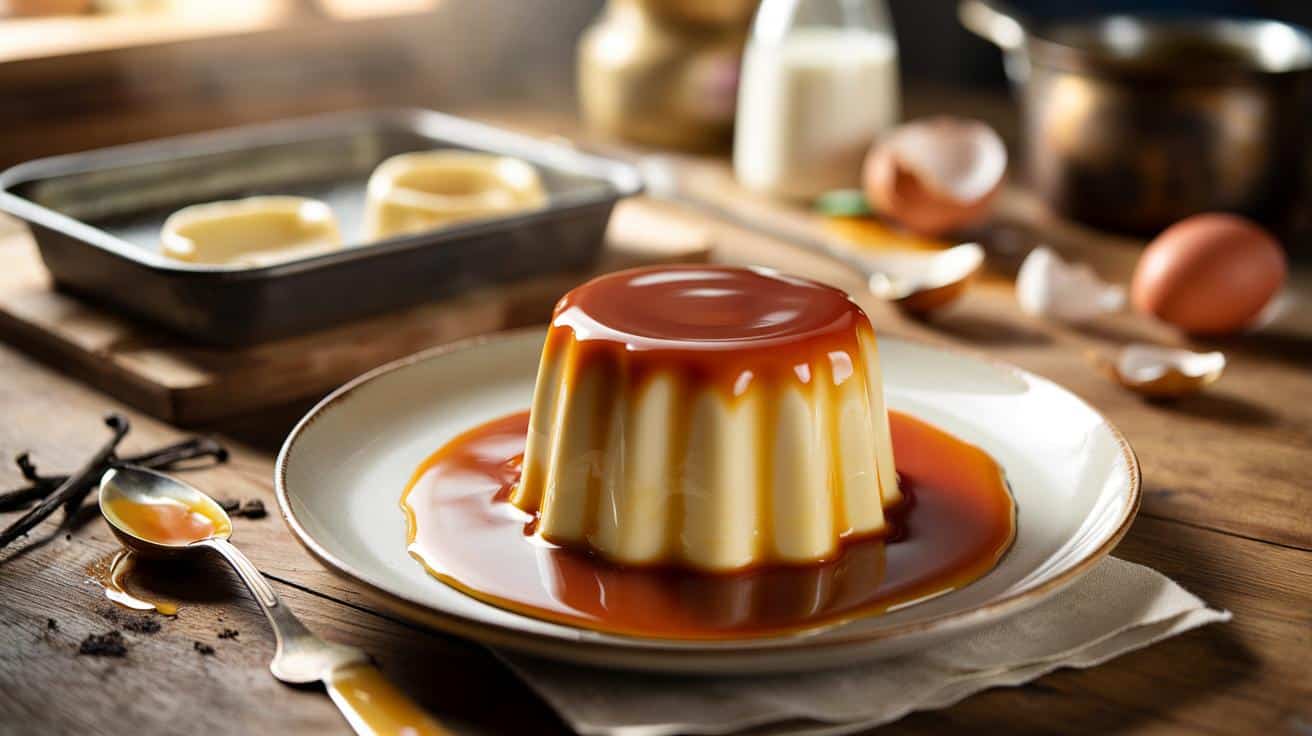
Traditional crème caramel stands on its own: a pale custard capped with a glossy, amber sauce spilling across the plate. That simplicity leaves room for small touches rather than heavy additions.
- Add a few poached pear slices or orange segments on the side for freshness.
- Serve with a short espresso to cut through the sweetness.
- Grate a hint of lemon or orange zest into the milk for a subtle twist.
A well‑made crème caramel should slip from the mould in one smooth move, with a soft wobble and a halo of sauce.
Home cooks who struggle with unmoulding often skip the resting time or forget to run a thin knife around the edge. A few seconds in hot water before turning out the ramekin can also help loosen the caramel shell.
Why this classic still matters in modern cooking
Beyond nostalgia, crème caramel remains a kind of exam for home bakers. It asks them to control heat, respect ingredients and accept that patience often trumps decoration. The same skills carry across to flans, baked cheesecakes and even quiches.
The dessert also links directly to broader culinary concepts worth knowing: coagulation of proteins in eggs, the Maillard reaction behind browning, and the way sugar caramelises at specific temperatures. Understanding those processes once makes future kitchen experiments far less random.
For families, the recipe offers a practical scenario too. It can be prepared the day before a dinner, left to chill and calmly unmoulded just before serving. That frees the oven and the cook for last‑minute dishes, while still ending the meal with something that feels thoughtful, not rushed.
Crème caramel may read like a modest recipe, but in many homes it acts as a quiet measure of confidence: if you can handle this custard without stress, most desserts within reach of a domestic oven suddenly look far less intimidating.